




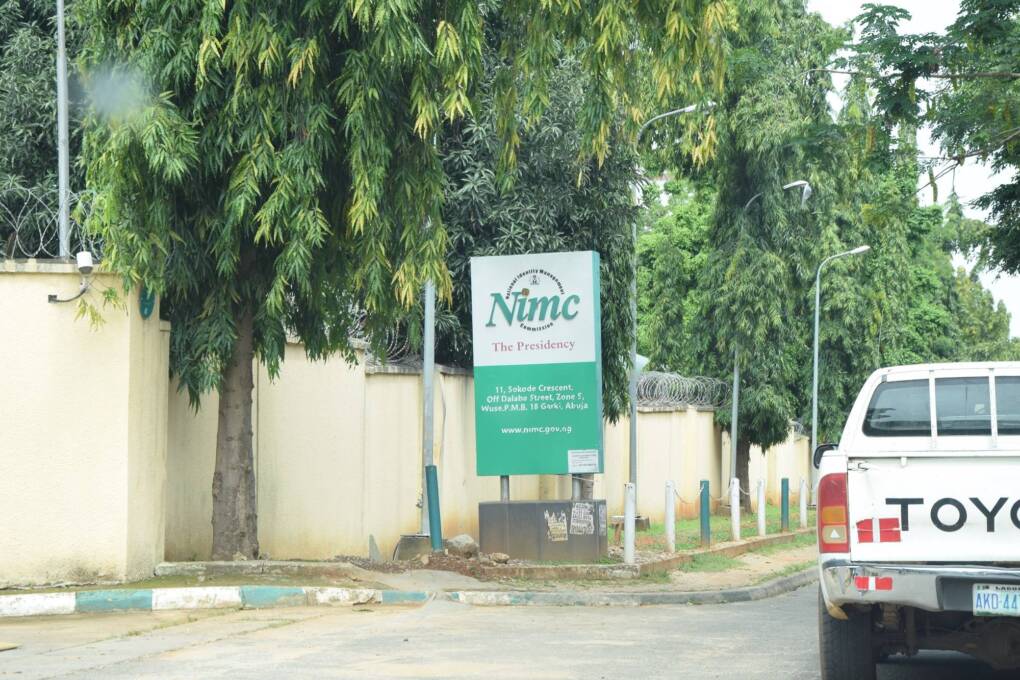
The National Identity Management Commission (NIMC) and nine other federal ministries, departments, and agencies are set to spend about N24 billion on software-related projects in 2026, according to the Federal Government’s Appropriation Bill.
NIMC leads with the largest single allocation of N7.58 billion, followed closely by the Federal Ministry of Education (Headquarters) with N7.55 billion for digitisation in administration and data systems.
Other significant allocations include the Mining Cadastral Office (N2.23 billion), Geological Survey Agency of Nigeria (N1.32 billion), National Cybercrime Coordination Centre (N1.26 billion), Nigeria Centre for Disease Control (N1.23 billion), Federal Ministry of Finance (Headquarters) (N1.09 billion), Nigeria Immigration Service (N1.01 billion), and Budget Office of the Federation (N827.14 million).
These ten MDAs account for the bulk of the proposed software spending across 115 MDAs budgeted for such projects in 2026.
Stakeholders in Nigeria’s ICT industry have raised concerns over perennial wastage and abuse in IT procurement processes by government agencies.
The National Information Technology Development Agency (NITDA) confirmed that 56 per cent of IT projects executed by Federal Public Institutions have failed, largely due to poor compliance with IT Project Clearance Guidelines.
NITDA Director-General Kashifu Inuwa stated that billions are wasted on fragmented, uncoordinated systems that fail to deliver value.
ALSO READ
Bureau of Public Procurement Director-General Dr Adebowale Adedokun added that MDAs often use intangible IT projects as a cover to siphon funds, citing lack of standardisation and contract inflation.
IT expert Adewale Adeoye noted that the economy could benefit significantly if half of the software budget supported local developers instead of foreign imports.
The Institute of Software Practitioners of Nigeria estimates Nigeria loses N156 billion annually to software importation, driven by preference for foreign solutions over local alternatives.
To curb wastage, the Bureau of Public Procurement introduced standard bidding documents for IT procurement and pledged closer collaboration with NITDA.
Adedokun recommended service-wide procurement of software licenses from global vendors to reduce costs and prevent inflation, alongside a national IT price intelligence template for benchmarking.
NITDA’s revised 2025 IT Project Clearance Guidelines emphasise interoperability, cost-effectiveness, transparency, and compliance with national digital economy goals.
The three-step framework—Solution Design, Implementation, and Quality Assurance—requires licensed contractors and certified professionals.
These measures aim to turn IT spending from a liability into a strategic asset for national development and digital transformation.