



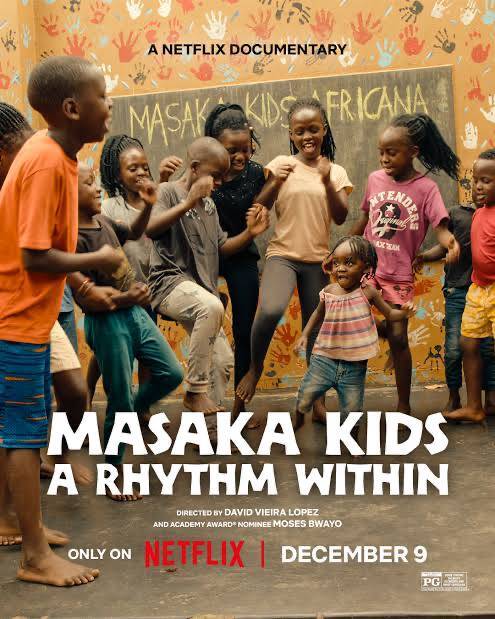
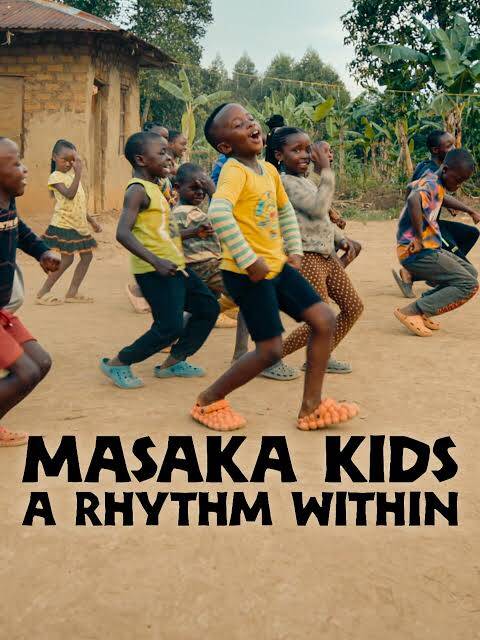
Masaka Kids Africana: A Rhythm Within is a Netflix documentary filmed in the Masaka District of Uganda. Produced by Campfire Studio Production in association with Wontanara Productions and Archewell Productions, the documentary is an inspiring reflection on humanity, resilience, and hope.
It tells the story of vulnerable Ugandan children whose lives were shaped by hardship but transformed through compassion. It reveals how an act of humanity led to the birth of Masaka Kids Africana, a home that provides care and protection for children who are orphaned, abandoned, living on the streets, or whose parents are unable to care for them.
At its core is the story of Sunna Hassan, the founder, whose personal journey mirrors the struggles faced by many of the children under his care. He chose empathy over indifference and community over despair. Through music, dance, and education, the film shows how human kindness became a lifeline—restoring dignity, purpose, and joy to children who once had very little.
Sunna shares how he lost his mother at an early age and was forced to survive on the streets, picking through waste bins for food before selling clothes and later opening a barber shop. Having endured hunger, neglect, and uncertainty, he came to understand the harsh realities faced by children living on the streets. It was this shared experience that moved him to act. Seeing children struggle in ways he once did, Sunna created Masaka Kids Africana as a safe place for children trying to survive against the odds. The initiative was born out of empathy and lived reality, offering children from the ghetto and the streets a chance at stability, care, and purpose.
The documentary sheds light on the severe impact of HIV/AIDS in the Masaka region, which Suna Hassan describes as having one of the highest rates of HIV transmission in Africa. Many children featured in the film have lost one or both parents to the disease. Sunna further explains how children living on the streets, particularly girls, are vulnerable to sexual exploitation, early pregnancy, and infection. Masaka Kids Africana, therefore, serves not only as a home but also as a protective shield against these harsh realities.
ALSO READ
Madinah, Sunna Hassan’s wife, plays a vital role in the organisation. Madinah explains that her love for music, DJing, and caring for children drew her to Sunna. Despite initial resistance from her parents, she chose to stand by him and support his vision. Her involvement, especially in mentoring and guiding the girl children, highlights the importance of emotional stability and moral guidance alongside physical care.
Sunna also recalls a defining moment when he was on his computer and came across a video of America’s Got Talent. Watching the performers, he imagined that one day the children around him could stand on similar stages, not for fame, but as a reminder of what was possible. Music had always been a refuge for him, and he recognised the same need for release and hope in the children.
For Sunna and the children, music and dance became a way to clear their minds, cope with hardship, and bring joy to others. What began as a shared outlet gradually became a tool for healing, allowing them to smile, to be seen.
One of the most significant features in the documentary is that of Johnny, the oldest child in Masaka Kids Africana. Johnny lost both his parents to HIV and lived on the streets before joining the group at about eight or nine years old. He recalls watching other children with their parents and wondering if he would ever experience such joy. At Masaka Kids Africana, he found not just shelter but family. He speaks with gratitude about how the organisation shaped him and says he is now studying hard because he hopes to become a lawyer someday. Johnny credits Sunna Hassan and the community for giving him direction, discipline, and a sense of belonging.
The documentary also features girls within the home, including Nabira and Rashida, who express gratitude for the guidance and protection they receive. Nabira, in particular, shares her dream of becoming a teacher. She hopes to build and own schools where she can teach, nurture children, and ensure that students are both educated and fed, an aspiration that reflects the care and stability she has found at Masaka Kids Africana.
Another touching story is that of Ian, who previously lived with his grandmother but turned to stealing sugarcane and jackfruit to survive. Labelled as troublesome and written off by society, Ian was initially seen as a negative influence. However, through the inclusive dance and music community created by Masaka Kids Africana, he experienced transformation. Ian now hopes to grow up and help others, just as he was helped, illustrating the power of patience, support, and second chances.
The documentary also traces the group’s rise to international recognition. In 2015, Masaka Kids Africana posted a dance video to Eddie Kenzo’s song Zigido, which went viral and caught the attention of the popular Ugandan singer. This exposure opened doors to media appearances and performances. During the COVID-19 lockdown in 2020, another dance video gained massive engagement on YouTube, eventually leading to opportunities such as representing Uganda at the Nickelodeon Kids’ Choice Awards and touring countries including the United Arab Emirates, Spain, Turkey, and beyond.
These milestones brought in donations and support that enabled Sunna Hassan and his wife to purchase land and improve living conditions for the children. What began with just 15 children has grown into a home for 38, many of whom now attend school through bursaries and scholarships secured by Sunna, who himself never had the opportunity to complete formal education.
The documentary concludes with a sobering projection: by 2030, cuts to aid in sub-Saharan Africa could result in the deaths of 500,000 children and create an additional 2.8 million orphans due to HIV/AIDS. Against this backdrop, Masaka Kids Africana: A Rhythm Within stands as a powerful reminder of what compassion, creativity, and community-driven action can achieve.
Overall, the documentary is both heartbreaking and inspiring. It not only exposes harsh realities but also celebrates resilience, dreams, and the transformative power of music and dance. Masaka Kids Africana: A Rhythm Within is a must-watch for anyone interested in human stories, social impact, and the enduring strength of humans.