

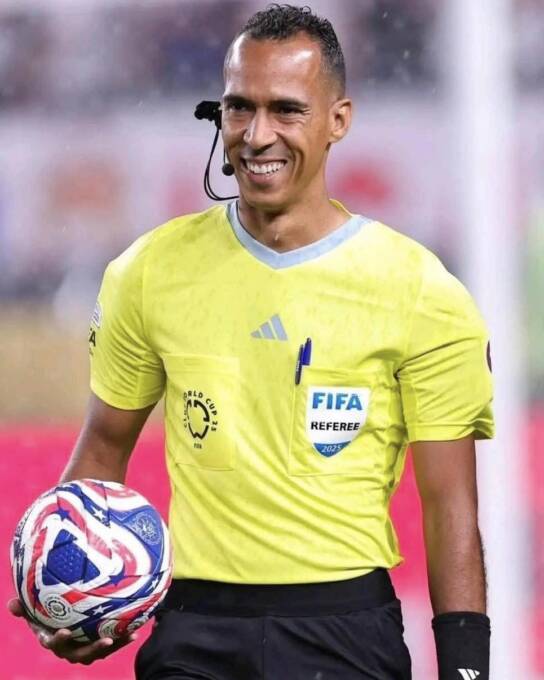
Hours before kickoff, the Confederation of African Football (CAF) removed Somali referee Omar Abdulkadir Artan from officiating the Africa Cup of Nations (AFCON) quarter-final between Nigeria and Algeria after discovering he wore boots from a brand not approved by tournament sponsors.
The decision followed Morocco’s formal complaint about Egyptian referee Amin Omar’s appointment for their quarterfinal against Cameroon, making CAF to replace him with Mauritanian referee Dahane Beida. Three of four quarterfinal matches faced officiating problem.
CAF’s crisis exposed systemic dysfunction. During the tournament, the Referees Committee triggered emergency deliberations at CAF headquarters after controversial decisions sparked heated technical discussions. Senior officials split over officiating standards.
Morocco’s influence looms large. The Royal Moroccan Football Federation filed complaints centered on late announcements and lack of clarity about officiating crews for matches. Cameroon’s federation responded angrily, planning appeals and claiming sudden changes disturbed preparations.
The tournament host nation drew accusations of favoritism. Cameroon believed they deserved two penalties when Morocco defender Adam Masina appeared to catch Bryan Mbuemo’s boot after missing the ball, then seemingly struck Etta Eyong’s head with his elbow in the penalty area. Referee Dahane Beida waved play on both times.
Tanzania, Mali, and others voiced similar grievances. In stoppage time of Morocco’s round of 16 match against Tanzania, striker Iddy Nado went down after a challenge from Adam Masina inside the penalty area, but referee Boubou Traore waved play on without checking VAR.
Host nation denies favoritism claims
Morocco coach Walid Regragui rejected bias claims. “We’re the team to beat. As the team to beat, people will try to find all sorts of reasons to say Morocco has an advantage,” Regragui stated after beating Cameroon. “The only advantage that Morocco has at this Africa Cup is playing in front of 65,000 spectators.”
His denials rang hollow. Morocco played all matches at the nearly 70,000-capacity Prince Moulay Abdellah Stadium in Rabat, where vast majorities of supporters created intimidating atmospheres for opponents and referees.
The Mali-Senegal quarterfinal faced different problems. Senegalese official Fatou Gaye served as assessor for the match between Mali and Senegal, raising questions among Malian officials who believed the choice violated basic principles of impartiality.
ALSO READ:
- Nigeria vs Tunisia Preview: Team News, H2H, match prediction as African giants clash in AFCON 2025
- CAF sanctions Libya, awards Nigeria 3 goals and 3 points after AFCON 2025 qualifier saga
- Four key takeaways from Nigeria’s AFCON 2025 qualifiers victory against Libya
- Hosts Morocco silence Cameroon to reach AFCON 2025 semi-finals
Behind the scenes, turmoil reigned. Growing tension within CAF’s referees committee led to delays appointing match officials for quarterfinals, with senior figures raising serious concerns over officiating standards and controversial decisions.
Commercial pressures compounded administrative failures. CAF’s commercial rules require match officials to use equipment tied to official partners, treating any deviation as breach of contract. Enforcement came publicly hours before matches.
Teams weaponize regulations
Nigeria’s camp reportedly alerted CAF to Artan’s footwear violation ahead of their Algeria clash, flagging that the Somali official wore boots from a non-approved brand violating CAF’s sponsorship agreement with Puma. Teams weaponized regulations.
The pattern reveals governance failure. CAF cannot distinguish legitimate administrative necessity from political manipulation. Transparency remains absent.
VAR standards dropped sharply from the previous tournament in Ivory Coast, with the Confederation of African Football having sacked their director of refereeing in August. That decision backfired spectacularly.
Teams now face uncertainty rather than sporting competition. Morocco advanced to face Nigeria in semifinals, but questions about officiating overshadowed achievement. African football deserves better administration than CAF currently provides.
The tournament’s credibility hangs by threads. Without urgent reforms establishing transparent protocols, merit-based selections, and independent oversight, AFCON will continue sacrificing legitimacy for expedience. CAF must recognize that modern football demands visible fairness, not just claims of neutrality.


