



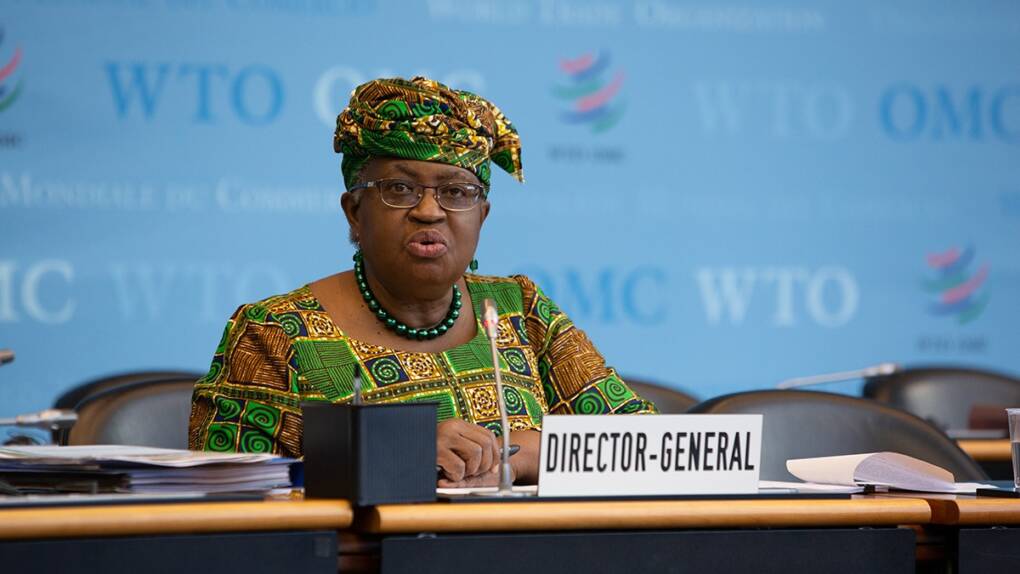
Director-General of the World Trade Organisation, Dr Ngozi Okonjo-Iweala, has stated that Nigeria must aggressively target global investors and supply chain relocations to drive job creation, deepen manufacturing, and reduce import dependence.
She made the remarks on January 22, 2026, during a panel discussion titled “From Scale to Capital: Financing Nigeria’s Role as Africa’s Digital Trade and Infrastructure Anchor,” held at Nigeria House at the World Economic Forum in Davos.
Okonjo-Iweala highlighted rising geopolitical tensions, particularly between the United States and China, which have accelerated supply chain diversification under “China+1” strategies.
She noted that firms are reducing single-country risk, though China remains central to many global value chains, while tariffs and trade restrictions incentivise relocation or diversification of production hubs.
The WTO chief stressed that these disruptions present a significant opportunity for Nigeria to capture a share of relocated supply chains, provided the country markets itself aggressively to prospective investors.
She urged continued efforts to showcase Nigeria as a worthy investment destination, including deliberate strategies to attract companies from China, the United States, and elsewhere.
ALSO READ
Okonjo-Iweala suggested Nigeria should secure a sizeable portion of supply chain movements still concentrated in Asia, including India as a key destination.
She advocated building solar panels in Nigeria to reduce imports, noting the country’s renewable capacity, and attracting investment in fashion to produce textiles locally rather than relying on imports.
The WTO DG also pointed to opportunities in the pharmaceutical sector, calling for targeted efforts to attract investment and boost local manufacturing.
She emphasised the need to move from stabilisation to job creation, praising ongoing reforms while stressing that progress must translate into employment and economic inclusion.
Managing Director of the Bank of Industry, Dr Oludapo Olusi, joined the panel discussion.
Earlier at the forum, Minister of Finance and Coordinating Minister of the Economy Wale Edun told Bloomberg that Nigeria remains focused on discipline, reform credibility, and sustained dialogue amid global fragmentation.
Edun highlighted the goal of raising the tax-to-GDP ratio to 18 per cent to channel resources into social services and infrastructure.
These efforts aim to position Nigeria as a competitive player in global supply chains and drive sustainable economic growth.