
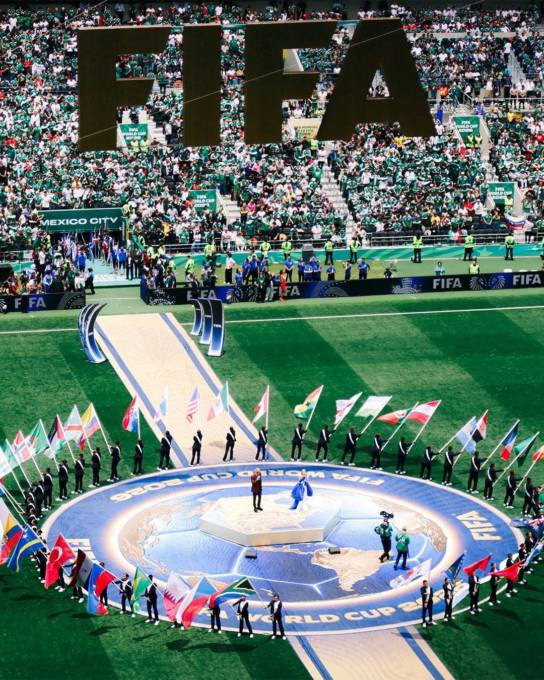
When the 2026 World Cup kicked off yesterday, everything had already changed because FIFA has overhauled the tournament’s playing regulations and disciplinary code.
The tournament now features 48 teams, a new knockout round, and a suite of strict regulations designed to kill time-wasting and gamesmanship.
Players who cover their mouths during confrontations can be sent off. Goalkeepers can no longer take tactical timeouts. Substitutes have 10 seconds to leave the pitch or their team plays with 10 men.
Welcome to the most radical World Cup in history.
More teams, more competitions
For the first time, 48 nations are competing. Twelve groups of four teams feed into a new round of 32, joined by the eight best third-place finishers. The old 16-team knockout bracket is gone. A team can now lose two matches and still win the trophy.
FIFA has also raised the prize money to a record $871 million. The champion will collect $50 million. Every participant is guaranteed at least $12.5 million.
📢 Stay Updated — Join Our WhatsApp Channel
💬 Be Part of Our WhatsApp Community
Join our WhatsApp Channel for curated updates, breaking stories, and exclusive insights from our newsroom.
📲 Join 👉 NRTC WhatsApp Channel
The clock is now a weapon
Referees will hold up a hand and count down five seconds for goal kicks and throw-ins. If the ball is not back in play, possession flips to the opponent. The days of a goalkeeper hugging the ball for 30 seconds are over.
Substitutions have also been weaponized. A departing player has 10 seconds to leave the field at the nearest point. Failure means the incoming player cannot enter for at least one minute. The team plays a man down until the clock resets.
Any outfield player who receives on‑field treatment must now stay off for a full 60 seconds after play restarts. The old 30‑second rule has been doubled. Only goalkeepers, players with head injuries, or those involved in collisions are exempt.
Red cards for silence and protest
The most controversial change targets what players say and how they say it.
Covering your mouth during a confrontation with an opponent is now a red-card offense. FIFA introduced the rule after several incidents where discriminatory or abusive language was hidden from referees and microphones.
Walking off the field to protest a decision is also a red card. Team officials who encourage such a walk‑off can be sent to the stands.
VAR finally grows up
Video review has expanded its authority. VAR can now review attacking fouls committed before a corner or free‑kick is taken. If a clear foul directly impacts a goal, penalty or disciplinary sanction, the referee can retake the set‑piece.
ALSO READ:
- REVEALED: Fastest goals in FIFA World Cup history
- Argentina wins 2022 FIFA World Cup tournament in Qatar
- FIFA forces female coach rule for Women’s World Cup
- Qatar 2022: FIFA World Cup matchday 5 preview and prediction
Second yellow cards are also reviewable. Mistaken identity can be corrected. A wrongly awarded corner that leads to a goal can be overturned.
The semi‑automated offside system has been upgraded. Sixteen cameras per stadium (up from 12) track 29 data points on each player. A sensor in the ball sends position data 500 times per second. Artificial intelligence now sends real‑time audio alerts to the referee’s headset.
The most audacious World Cup yet
These changes come with keeping the ball moving. FIFA wants faster restarts, fewer delays, and less manipulation. Players who grew up gaming the old system must now adapt or face punishment.
The 2026 World Cup comes with new rules. Some rules will work. Some will fail. But nothing will be the same.
🔍 Explore More
- NRTC English Knowledge Base – Learn, improve, and sharpen your English skills.
- Top Stories From Around the World – Stay informed with the latest global news and insights.
- Specially Curated Listicles – Discover interesting lists, guides, and deep dives selected for our readers.
- Stay Updated: Join our mailing list and never miss the latest articles and updates from NRTC.