




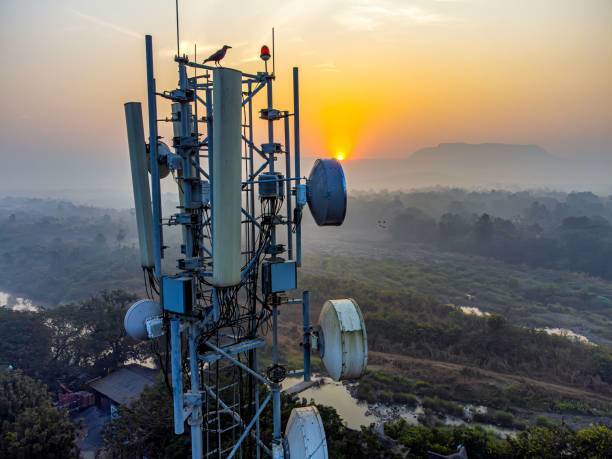
Foreign direct investment into Nigeria’s telecommunications sector recorded a sharp recovery in the third quarter of 2025, rising to $208.51 million, according to the latest capital importation data from the National Bureau of Statistics.
The figure represents a substantial rise from the $14.74 million posted in the same quarter of the previous year.
The Q3 performance signals renewed investor confidence after a weak showing in the corresponding period of 2024, though inflows remain uneven across quarters. Cumulative investment for the first nine months of 2025 reached $392.92 million, surpassing the $319.72 million recorded during the same period in 2024 by approximately 23 per cent.
Earlier in 2025, telecom sector inflows stood at $80.78 million in the first quarter before rising to $103.63 million in the second quarter. By contrast, 2024 had opened stronger with $191.57 million in Q1 but declined steadily to $113.42 million in Q2 before collapsing to $14.74 million in Q3.
The rebound may reflect improved investor sentiment following regulatory adjustments and exchange rate reforms. On January 20, 2025, the Nigerian Communications Commission approved a 50 per cent tariff adjustment for telecom operators, citing rising operational costs and the need to sustain industry growth.
ALSO READ
According to the Association of Telecommunications Companies of Nigeria, the tariff adjustment enabled operators to reinvest additional revenue into enhancing network quality and expanding digital access. The association stated that these investments would translate into improved connectivity, wider coverage, and solutions designed to meet evolving consumer needs.
ATCON noted that telecom tariffs had remained static for over a decade despite escalating costs from inflation, exchange rate volatility, and the substantial investments required to meet growing demand.
The rebound comes amid concerns that Nigeria is not attracting sufficient long-term capital for large-scale telecom infrastructure deployment. The country missed its 70 per cent broadband penetration target in December 2025, largely due to inadequate fibre rollout, high right-of-way charges, power constraints, and slow private investment.
Industry stakeholders have warned that achieving nationwide high-speed connectivity will require billions of dollars in sustained investment, particularly for rural coverage and 5G expansion. Telecommunications infrastructure remains capital intensive, with operators facing rising costs from currency depreciation, diesel expenses, and import duties on equipment.