



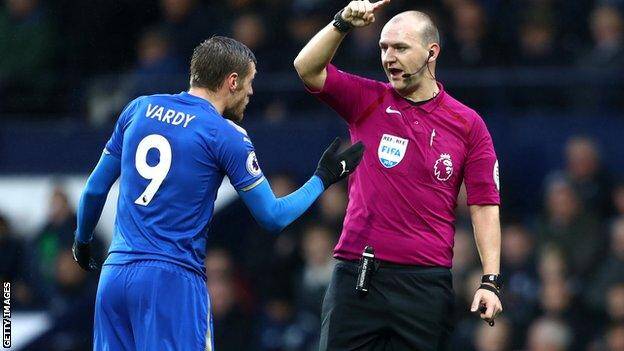
In an era when football is analysed to the smallest detail, one role arguably carries more pressure than any other – The Referee.
Players can miss chances, managers can make poor tactical decisions and pundits can get predictions wrong. But referees operate in a unique environment where every action is judged instantly by millions of people.
In most professions, mistakes happen behind closed doors. In football, however, they happen under stadium floodlights and global broadcast cameras.
On a typical matchday, in the English Premier League, a referee performs their job in front of around 60,000 spectators inside the stadium. Beyond the stands, millions more watch on television or online. Every decision — a foul, a penalty, a red card — is immediately scrutinised in real time.
And it rarely ends there.
ALSO READ
Within seconds, replays appear from multiple camera angles. Slow-motion footage circulates across social media. Television pundits analyse positioning, timing and interpretation of the laws. For the next 48 hours, talk shows, podcasts and online debates dissect the referee’s judgement.
There are very few professions where your work is effectively audited live by such a vast audience.
A surgeon operates in an operating theatre. A judge delivers rulings inside a courtroom. A teacher works inside a classroom. In football, the referee’s workplace is a global stage where every movement is recorded and replayed repeatedly.
The modern game has only intensified that scrutiny.
Technologies such as the Video Assistant Referee (VAR) were introduced to reduce clear and obvious errors. While VAR has helped correct some decisions, it has also increased expectations that referees should get every call right. Any perceived mistake now sparks widespread debate across television, radio and social media.
Even hesitation can be interpreted as uncertainty.
If a referee pauses before awarding a penalty, commentators may question their confidence. If they make a quick call, critics may say it was rushed. Either way, their judgement is examined in microscopic detail.
Despite the pressure, referees are required to make dozens of decisions in every match — often within seconds — while tracking 22 elite athletes moving at high speed.
Physical fitness, positioning, rule interpretation and communication all play a role. Yet unlike players or coaches, referees rarely receive public praise when matches pass without controversy.
Instead, attention usually arrives when something goes wrong.
ADVERTISEMENT

This has led to a persistent narrative online that referees are lazy, biased or incompetent. In reality, most officials spend years progressing through lower leagues, undergoing constant training, assessments and performance reviews before reaching the professional level.
It is an unforgiving job that demands resilience, concentration and thick skin.
Football thrives on passion, and debates over refereeing decisions will always be part of the game. But when viewed in context, the scale of scrutiny referees face remains extraordinary.
Few professions require individuals to make split-second judgments while knowing that millions will analyse those choices long after the final whistle.
In football, mistakes are not just remembered. They are replayed forever.