

By birth, I am an indigene of Ibadan, Oyo State. I was born in Inalende and spent the first three decades of my life in Ibadan before relocating to Ogun State and later to Australia. I am not writing as an armchair analyst. I lived in the city. I hustled in it. From legitimate menial jobs to basic survival work, I did what many young people in Ibadan had to do to get by.
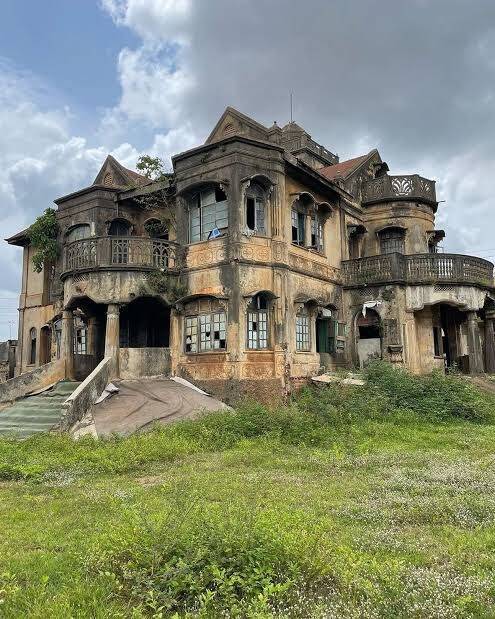
While growing up, one sight that consistently disturbed me was abandoned houses. In areas such as Osuntokun Avenue in Old Bodija, Ojo, Ibadan, New Bodija, and parts of inner-city neighbourhoods around Dugbe, among others, large houses stood quietly behind rusted gates. Grass swallowed their compounds, paint peeled off walls, and roofs aged without care. Even then, I kept asking myself why someone would spend so much money building a house that nobody lived in. I promised myself that if I ever became wealthy, I would not build houses that my children would abandon after I joined my ancestors. Then, I thought time would correct the problem. It has not. In fact, over the last twenty years, it has grown worse.
Today, South-West Nigeria is dotted with idle real estate. From Ibadan to Abeokuta, Akure to Ado-Ekiti, Ijebu-Ode to towns along the Lagos borders, abandoned and underused houses are everywhere. I am convinced that in the next 20 to 30 years, we will see far more abandoned houses than we do today if nothing changes. Why? People are now building increasingly gigantic homes, often without a clear plan for long-term use. Some build to display success. Others call it a retirement home. Some do it because of family pressure or fear of appearing unsuccessful abroad.
ALSO READ
A large number of these houses belong to Nigerians in the diaspora who may not return to Nigeria every year. When they do, many choose hotels for comfort, security, and convenience. Their children, raised and settled abroad, often have their own lives, careers, and financial independence. Many may never return to live permanently in Nigeria. When parents pass on, these houses are left behind. They are too personalised to rent out easily, too expensive to maintain, and too emotional to sell. Over time, they are locked up, neglected, and eventually abandoned. That is not legacy. It is frozen capital.
Design also plays a role. Many of these houses are built in ways that make them difficult to convert into useful investments. Over-sized mansions with rigid layouts and excessive private spaces cannot easily be rented, subdivided, or repurposed. Once the original owner is gone, the house loses economic relevance and becomes a burden on the family and the neighbourhood.
During my recent visit to Nigeria, I noticed a small but important shift. Some people are now investing in serviced or short-let apartments, sometimes called short-stay apartments. These are designed for people who stay temporarily—returnees, professionals, visitors, and business travellers. They are practical, regularly occupied, and easier to manage. What stood out to me was intention. These buildings were designed to be used, not just admired. Yet, despite this innovation, abandoned buildings are still there. On the same streets where short-let apartments are fully booked, old mansions sit empty behind locked gates. The contradiction is striking. It tells me that the problem is not a lack of ideas, but a refusal to rethink how and why we build.
At the individual level, I believe Nigerians—both at home and in the diaspora—need to rethink what “building a house at home” truly means. Houses should be built with use in mind, not just pride. Smaller, flexible designs that can be rented, sold, or adapted over time make more sense than massive structures meant only for one household. Building emotionally, without practical planning, is one of the surest ways to create abandonment. This issue is particularly relevant for Nigerians in the diaspora. Many of us build houses based on nostalgia or imagined retirement plans without asking hard questions about management, maintenance, or succession. We assume our children will take over without involving them in decision-making. When reality finally sets in, silence replaces intention, and abandonment follows.
Estate planning should not end with writing a will. It must include realistic decisions about property use after death. I strongly believe people should consider shared family housing, serviced apartments, or commercial-residential hybrids that can survive beyond one lifetime. A house that continues to serve people, generate income, and contribute to the community is a better inheritance than a grand building slowly overtaken by weeds.
The government also has a role to play. State authorities across the South-West must acknowledge the scale of the problem. Abandoned buildings raise security concerns, reduce property values, and weaken entire neighbourhoods. Governments should encourage adaptive reuse, impose appropriate penalties on long-term abandoned properties, and offer incentives for converting idle buildings into rental units, student housing, care facilities, or mixed-use developments. Urban planning should move beyond approval papers and focus on long-term sustainability.
I write this as someone who grew up surrounded by abandoned houses and now sees even more decades later. If we do not change how and why we build today, the next generation will inherit cities filled with locked gates, wasted wealth, and unanswered questions. That would be a tragic inheritance and one we still have the chance to prevent.
Dr Gbenga Afolayan is an artist and teacher who blends creativity with humour, sharing football and Chelsea banter, music, prayers, and honest takes on gender, politics, and everyday life.


