

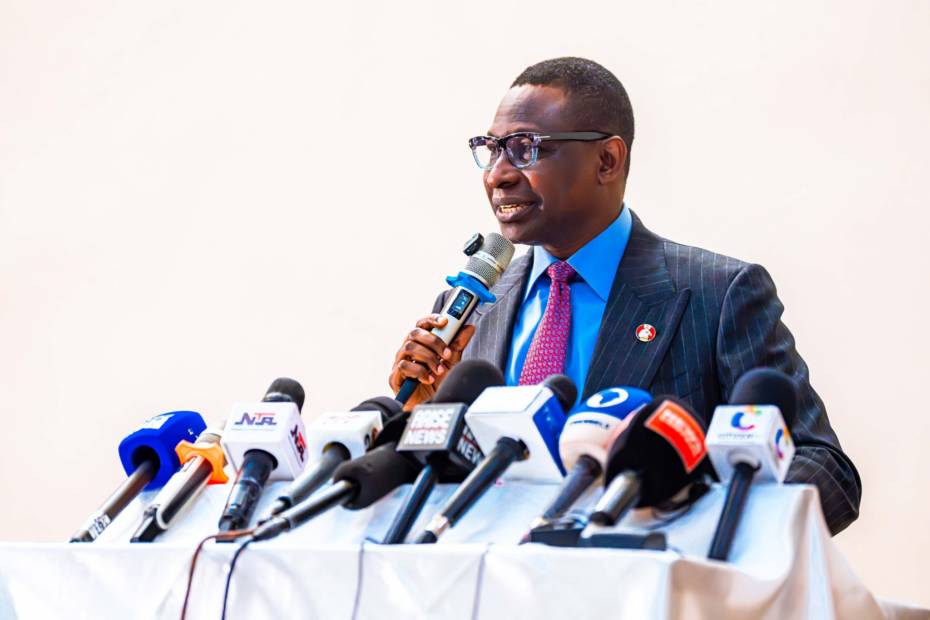
The Chairman of the Economic and Financial Crimes Commission (EFCC), Ola Olukoyede, has urged religious leaders across Nigeria to use their platforms to discourage financial crimes and raise awareness of corruption’s damaging effects on society.
Mr Olukoyede made the call in Abuja while speaking at the 2026 second Council Meeting of the Nigeria Inter-Religious Council (NIREC), where the Anti-Corruption Interfaith Manual was also officially launched.
The EFCC chairman, who presented a paper on the theme, “Shared Sacred Flourishing in Nigeria”, said religious institutions had an important role to play in rebuilding the country’s moral values and promoting integrity among citizens.
He said the progress and wellbeing of the country depended largely on the choices and behaviour of its citizens, warning that corruption undermines efforts to create a prosperous society.
“Corruption privatises what is shared, converts the commonwealth into private advantage, and allows one person to flourish by making many others poorer,” Mr Olukoyede said.
📢 Stay Updated — Join Our WhatsApp Channel
💬 Be Part of Our WhatsApp Community
Join our WhatsApp Channel for curated updates, breaking stories, and exclusive insights from our newsroom.
📲 Join 👉 NRTC WhatsApp Channel
He added that protecting the nation’s common resources remained central to the EFCC’s mandate.
According to him, although Christianity and Islam have different traditions and practices, both religions uphold values such as justice, human dignity and peaceful coexistence.
Mr Olukoyede said the EFCC had, over the years, worked with religious leaders through an interfaith approach to promote anti-corruption messages in churches and mosques.
He said the initiative was based on the understanding that genuine religious teachings do not support dishonesty, fraud or the acquisition of wealth through illicit means.
The collaboration between the EFCC and Christian and Islamic scholars eventually produced the Anti-Corruption Interfaith Manual, which provides religious perspectives on corruption and other forms of financial misconduct.
“We are using this opportunity to launch the Manual, which we hope our religious leaders will surely find useful in preaching anti-corruption messages to their members,” he said.
ALSO READ
- UNGA 81: Nigeria, Italy lead $5bn global education financing campaign
- Bayelsa govt restates commitment to counterpart funding for rural infrastructure
- EFCC boss urges religious leaders to intensify anti-corruption campaign
Mr Olukoyede stressed that financial crimes affect Nigerians irrespective of their religion, ethnicity or social background.
“Financial crime has no religion. Corruption has no tribe. Fraud does not become Christian or Muslim because of the identity of the person accused of committing it,” he said.
He noted that the consequences of corruption could be seen in poor infrastructure, inadequate healthcare facilities, rising living costs and unemployment, stressing that such problems affect citizens across religious and ethnic divides.
The EFCC chairman urged pastors, imams and other religious leaders to make use of the newly launched manual and speak more firmly against the growing celebration of unexplained and illicit wealth.
He said law enforcement agencies could investigate and prosecute offenders, but religious institutions had a different responsibility in shaping people’s values and discouraging criminal behaviour.
“The EFCC can investigate a person’s conduct; faith communities can influence that person’s character,” Mr Olukoyede said.
🔍 Explore More
- NRTC English Knowledge Base – Learn, improve, and sharpen your English skills.
- Top Stories From Around the World – Stay informed with the latest global news and insights.
- Specially Curated Listicles – Discover interesting lists, guides, and deep dives selected for our readers.
- Stay Updated: Join our mailing list and never miss the latest articles and updates from NRTC.
“We can prosecute fraud; religious teaching can cultivate honesty. We can confiscate illicit wealth; churches and mosques can challenge the values that make society worship wealth without questioning its source. We can punish corruption after the event. Faith can help prevent it before it begins.”


