First HoldCo Plc has attributed its sharp profit decline in the 2025 financial year to a deliberate N748 billion one-off impairment taken to clean up legacy non-performing loans.
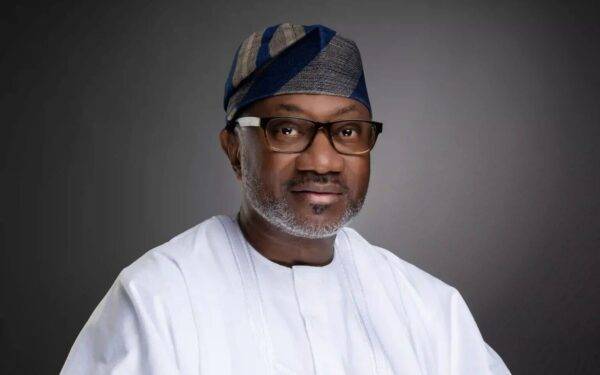
The explanation was provided by the company’s Chairman, Femi Otedola, in a statement shared on his X account, following investor concerns triggered by the group’s latest financial results.
First HoldCo’s unaudited 2025 accounts showed a significant fall in profitability despite strong interest income, raising questions about the underlying health of the business.
Otedola said the decline reflected a strategic balance sheet reset rather than operational weakness, noting that the group chose to fully recognise old bad loans instead of carrying them forward.
“At First HoldCo, we decided to clean house properly by taking a one-time N748 billion hit to admit old bad loans, which is why profit appears to have crashed,” he stated.
He explained that the timing of the impairment was influenced by regulatory pressure from the Central Bank of Nigeria (CBN), which has urged banks to stop deferring credit losses.
ALSO READ
According to Otedola, the move sends a strong signal on credit discipline and helps rebuild trust in the banking system.
He added that the group’s core business remained strong, highlighting interest income of N2.96 trillion and net interest income of N1.91 trillion in 2025.
First HoldCo reported a pre-tax profit of N229.1 billion for 2025, down 71.2% from N796.5 billion in 2024, while profit after tax fell by 93.4%.
The company’s shares closed at N45 on January 30, 2026, reflecting a 2.5% daily decline and a year-to-date loss of 6.05%.
Otedola increased his stake in First HoldCo to 18.12% in 2025, holding a total of 8.05 billion shares, making him one of the group’s largest shareholders.
The development comes amid the CBN’s banking recapitalisation exercise, which requires international banks to maintain a minimum capital base of N500 billion.
First HoldCo earlier confirmed that its banking subsidiary, First Bank of Nigeria Limited, had met the CBN’s capital requirement.