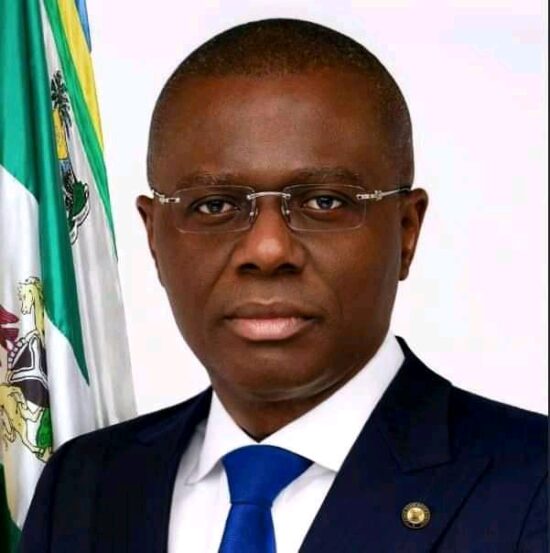
Governor Babajide Sanwo-Olu has declared that Lagos State is shifting its environmental strategy from mere waste disposal to “value reclamation.”
Speaking at the 2026 Nigeria Circular Economy Week on Monday, the governor revealed that the adoption of circular economy principles is enabling the state to transform environmental challenges into profitable markets.
The event, themed “Turning Challenges into Markets,” was held at the Lagos Continental Hotel.
He was represented by the Commissioner for the Environment and Water Resources, Tokunbo Wahab.
The governor emphasised that recent enforcement actions—such as clearing illegal structures under bridges and removing drainage blockages—are not just about aesthetics, but about reclaiming valuable infrastructure.
Clearing under-bridge spaces promotes urban renewal by creating room for organised hubs, including transport terminals, green spaces, and community facilities.
Removing drainage encroachments improves infrastructure longevity by restoring natural water flows, reducing flood risks, and extending the lifespan of public roads.
Demolition and clearance efforts are increasingly regarded as opportunities for resource recovery, allowing materials such as metals, timber, and plastics to be salvaged.
“Circularity starts with good governance. Before we can reuse materials, we need functioning systems; before markets develop, we must restore order,” the governor stated.
READ ALSO
A key pillar of the 2026 agenda is the formalisation of the informal waste sector.
The governor outlined plans to empower small and medium-sized enterprises (SMEs) that convert waste into marketable products.
He also intends to integrate informal waste pickers into organised recovery systems, strengthening supply chains.
Additionally, government spending will be aligned with sustainable materials made from recycled content through public procurement.
The Netherlands Ambassador, Bengt Van Loosdrecht, noted that Lagos has been selected as the initial pilot model for the Nigeria Circular Economy Programme.
Backed by the African Development Bank, the program aims to scale sustainable solutions for the “triple climate crisis”: climate change, biodiversity loss, and pollution.
During a panel session, it was highlighted that the state’s 2022 ban on single-use plastics (including bags, straws, and cutlery) remains a cornerstone of this transition.
By reducing plastic pollution at the source, the state is forcing a shift toward more sustainable, circular alternatives.
Sanwo-Olu issued a three-point call to action. He urged manufacturers to design products that are specifically made for reuse and easy recycling.
He encouraged researchers to translate circular innovations from the laboratory to the production line.
He also called on investors to support scalable circular enterprises that are ready to expand in the Lagos market.