

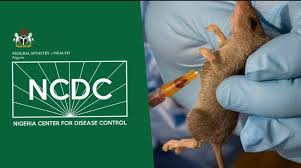
The Nigeria Centre for Disease Control and Prevention (NCDC) has confirmed a total of 366 deaths linked to Lassa fever and meningitis this year, underscoring the persistent public health threat posed by the two infectious diseases.
According to the agency, from January 1 to May 18, 2025, there were 733 confirmed cases of Lassa fever out of 5,118 suspected infections, spanning 18 states and 95 local government areas. During this period, 141 people died from the disease, representing a case fatality rate (CFR) of 19.2 per cent.
Meanwhile, between September 30, 2024, and April 6, 2025, the NCDC confirmed 192 cases of meningitis from 2,911 suspected cases across 24 states and 173 LGAs. The disease claimed 225 lives during this period, with a CFR of 7.7 per cent.
The NCDC’s latest Lassa fever situation report noted a spike in new infections in epidemiological week 20, with 13 new cases recorded in Edo, Ondo, and Benue — a significant jump from three the previous week.
“Cumulatively in week 20, 2025, 141 deaths have been reported with a case fatality rate of 19.2 per cent, which is higher than the CFR for the same period in 2024 (18.3 per cent). In total for 2025, 18 states have recorded at least one confirmed case across 95 LGAs,” the report stated.
ALSO READ
The data showed that 72 per cent of all confirmed Lassa fever cases were concentrated in three states: Ondo (30 per cent), Bauchi (25 per cent), and Edo (17 per cent), with the remaining 28 per cent spread across 15 other states.
The most affected age group for Lassa fever is between 21 and 30 years, with a median age of 30. The male-to-female ratio among confirmed cases is 1:0.8. The NCDC observed a general decline in both suspected and confirmed Lassa fever cases compared to the same period last year. No new cases were reported among healthcare workers in the most recent week.
To manage the situation, the national Lassa fever multi-partner, multi-sectoral Incident Management System remains active at all levels of government.
In the case of meningitis, children aged 5 to 14 were most affected, with males accounting for 60 per cent of all infections.
“97 per cent of all suspected cases are reported from 10 states – Kebbi (1,423), Katsina (302), Jigawa (160), Yobe (165), Gombe (77), Sokoto (450), Borno (84), Adamawa (38), Kano (38), and Bauchi (81),” the agency stated.
To bolster the national response, the NCDC has activated a multi-sectoral Emergency Operations Centre in collaboration with the Federal Ministry of Health, the National Primary Health Care Development Agency, the Nigerian Meteorological Agency, and other development partners. Weekly coordination meetings are ongoing with affected states to enhance response strategies.
The agency assured that it will continue to provide both on-site and remote technical support, especially to the most affected states, while also strengthening preparedness and response mechanisms across the country.


