
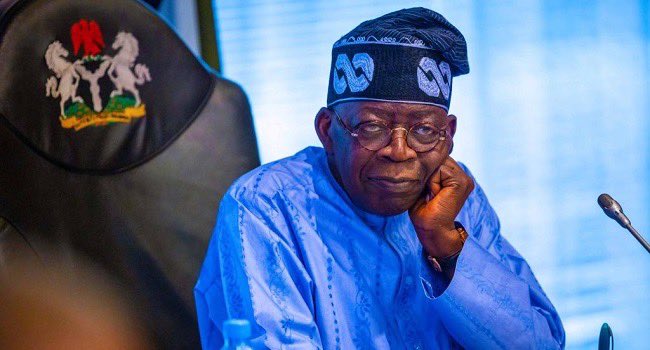
President Bola Tinubu has re-emphasised his administration’s commitment to ensuring that the benefits of the “Renewed Hope” reforms reach every community in Nigeria.
Speaking at the conclusion of the two-day National Economic Council (NEC) Conference in Abuja, the President called for a shift from “dialogue to delivery.”
Represented by Senate President Godswill Akpabio, the President addressed a high-powered gathering of state governors and private sector leaders, asserting that national progress is a “process that requires courage, patience, and consistency.”
A major highlight of the conference was the NEC’s adoption of a non-kinetic approach to national security.
The Council recommended that states move beyond traditional force and prioritise addressing the root causes of unrest: unemployment and poverty.
States are urged to align their internal security strategies with the national framework under the Renewed Hope Agenda.
By tackling economic hardship at the grassroots level, the government aims to curb the recruitment grounds for banditry and terrorism.
READ ALSO
The conference centred on the Renewed Hope National Development Plan (2026–2030), a blueprint designed to catapult Nigeria into a one-trillion-dollar economy.
To achieve this, the NEC issued several “far-reaching” policy directives.
The Federal Government was urged to diversify the economy by prioritising domestic oil refining and non-oil sectors to reduce import dependence.
All tiers of government must strengthen collaboration to ensure macroeconomic reforms result in “real impact” for ordinary citizens.
Governments at all levels were tasked with identifying “bankable” projects in manufacturing, agriculture, digital infrastructure, and energy.
“The decisions we make here must translate into visible improvements — in jobs created, roads constructed, and healthcare improved,” the President noted.
The Council further pushed for modernising the nation’s economic engine.
In a bid to end multiple taxation, the NEC commended 12 states that have already passed the harmonised tax law and urged the remaining 24 states to accelerate their legislative processes.
To remain globally competitive, the Council implored all levels of government to invest heavily in Artificial Intelligence (AI) and technology skills.
Tinubu extended his gratitude to Vice President Kashim Shettima for his “steady leadership” of the NEC.
He noted that the success of the 2026–2030 Development Plan hinges on disciplined execution and the synergy between the public and private sectors.
The two-day summit featured seven panel sessions and nine lead papers, covering themes from fiscal governance to partnership frameworks for growth, marking a decisive step toward what the administration calls a “more resilient and inclusive society.”