




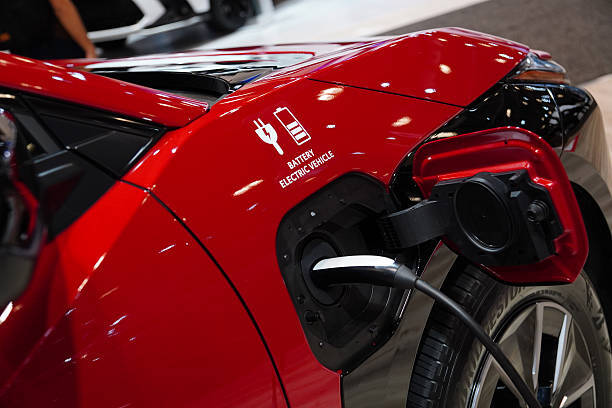
Nigeria is positioning itself to participate in the estimated $800 billion global electric vehicle market, leveraging its mineral resources, domestic demand and emerging assembly capacity to secure a place in the clean mobility value chain.
Industry stakeholders say the country’s deposits of rare-earth elements such as monazite and neodymium, alongside growing lithium exploration, provide a foundation for integration into battery production and electric vehicle manufacturing.
Data from the International Energy Agency show global electric vehicle sales exceeded 14 million units in 2023, accounting for about 18 percent of total car sales worldwide, with annual volumes projected to surpass 20 million before 2030.
The rapid expansion of electric mobility has increased demand for lithium-ion batteries and rare earth magnets, key components used in EV motors and energy storage systems, as major economies pursue net-zero targets.
Analysts argue that Nigeria could combine its mineral base with regional trade advantages under the African Continental Free Trade Area to serve West Africa, a region that currently depends heavily on imported vehicles.
The Minister of Solid Minerals Development, Dele Alake, has said the government intends to shift from exporting raw ores to promoting local processing, linking mineral development to downstream manufacturing such as electric vehicles.
However, industry executives caution that developing battery manufacturing capacity will require long-term investment, technology partnerships and policy reforms to create a competitive environment for investors.
ALSO READ
According to the National Automotive Design and Development Council, Nigeria’s installed vehicle assembly capacity exceeds 400,000 units annually under the National Automotive Industry Development Plan, though actual output remains well below that level.
Geological surveys indicate commercially viable lithium deposits in Nasarawa, Kogi and Kaduna states, alongside rare earth minerals including monazite, positioning the country as a potential supplier of critical inputs for EV production.
Industry projections from McKinsey & Company suggest global demand for rare earth magnets could triple by 2035, largely driven by electric vehicle manufacturing.
Nigeria’s ability to compete will depend on its progress in building processing facilities, scaling assembly operations and addressing infrastructure constraints, as its population of about 240 million presents a sizeable domestic market if pricing and charging networks improve.