

Today, May 27, marked as Children’s Day, is a day we are supposed to celebrate our children in full happiness and joy. But sadly, we cannot. Parents are crying, families are crying, people are crying. The nation mourns instead of rejoicing.
At the official Children’s Day celebration in Abuja, the Minister of Women Affairs, Hajiya Sulaiman‑Ibrahim, representing President Bola Tinubu, described Nigerian children as “the pride of the Republic” and pledged continued support through initiatives such as the Universal Child Benefit and the Future Now digital literacy program. She urged Nigerians to recommit to protecting children and guiding them with love and wisdom.
But outside Eagle Square, the lived reality tells a different story. The insecurity rate in this country is very high, and it has become the defining feature of childhood in Nigeria today.


Parents wake up each morning in fear, dressing their children for school while silently praying they return home safely.
Let ask this question, are our leaders truly working towards what they promised us?
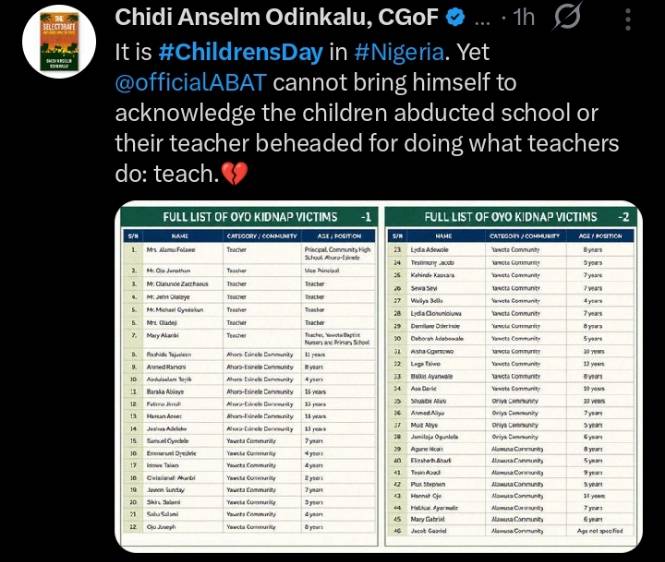
According to reports , In May 2026, gunmen stormed schools in Oriire Local Government Area of Oyo State, abducting dozens of children and teachers. One teacher was later killed, leaving families shattered.
ALSO READ: Children’s Day: Oyebanji reaffirms commitment to child development
In February, armed groups attacked Kaiama in Kwara State, killing more than 200 people and abducting 176 villagers.
By March, Boko Haram fighters laid siege to Ngoshe town in Borno State, abducting over 400 people, including children. Kaduna State has also suffered repeated assaults.
In January and March, churches in Kajuru and Kachia were attacked, with nearly 200 worshippers abducted during services.
📢 Stay Updated — Join Our WhatsApp Channel
💬 Be Part of Our WhatsApp Community
Join our WhatsApp Channel for curated updates, breaking stories, and exclusive insights from our newsroom.
📲 Join 👉 NRTC WhatsApp Channel
And in April, Zamfara State witnessed another mass abduction, with 150 villagers taken in Bukkuyum Local Government Area, following earlier kidnappings of 92 people. Over 20 million Nigerian children have been kidnapped or forced out of school due to insecurity.
Should we then say we have heartless, blood‑thirsty looters as leaders, rather than protectors of our future?
I wonder how some of our leaders actually sleep at night, knowing that many of our children are in the forest, live with constant fear and cannot even fall asleep. Imagine the kind of trauma and nightmares they are experiencing.
How can a family that has been a victim of these issues find peace? How can they rest, knowing fully their child is out there in the cold world, uncertain whether they will survive or not?
On a serious note, Nigeria is bleeding, and something needs to be done urgently.”
Questions to Ask Ourselves as Nigerians
Why are schools still unsafe despite repeated pledges of “Safe Schools Initiatives”?
How can 20 million Nigerian children remain out of school while leaders speak of inclusion?
Why do families have to crowdfund ransom payments while government responses remain reactive?
No where is safe in Nigeria. Even churches are not safe.

To attend a church or a mosque has become a problem. Walking freely as a Nigerian is a problem. Attending events is a problem. Even closing our eyes to take a nap has become a big problem in our country, Nigeria. And yet, our leaders act as if nothing is happening.
But is this how we are going to continue forever — living our lives in fear and dilemma for eternity?
READ ALSO: Insecurity: Tinubu suspends G20, AU-EU summit trip
Children’s Day is meant to be a festival of joy, but insecurity has turned it into a day of mourning. Parents are left with tears instead of laughter, and families are trapped in trauma instead of celebration.
Our leaders must move beyond ceremonial speeches. Promises alone cannot protect our children. Security architecture must be strengthened, intelligence sharing must be prioritized, and rapid response must become the norm.
Citizens must demand accountability, speak with one voice across ethnic and religious divides, and refuse to normalize fear. Civil society must continue to amplify the voices of victims so that their pain is not forgotten.
Children are living in fear. This is not the future we promised them. Children’s Day should remind us not of parades and promises, but of the urgent need to secure classrooms, protect families, and restore hope.
Nigeria is bleeding — and unless leaders act decisively, the future we celebrate today may never arrive.
🔍 Explore More
- NRTC English Knowledge Base – Learn, improve, and sharpen your English skills.
- Top Stories From Around the World – Stay informed with the latest global news and insights.
- Specially Curated Listicles – Discover interesting lists, guides, and deep dives selected for our readers.
- Stay Updated: Join our mailing list and never miss the latest articles and updates from NRTC.