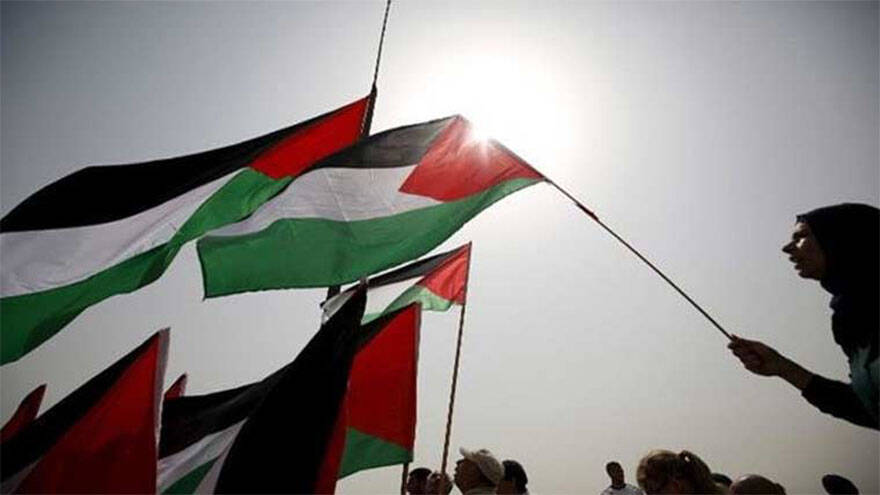
Observed annually on November 29, the International Day of Solidarity with the Palestinian people could be seen as a product of the partition plan. The plan was to partition Palestine into two independent states, one Arab (Palestine) and one Jewish (Israel), and Jerusalem, under international control.
A quick dive into Palestinian history
The 1967 war was fueled by the UN’s partition plan to divide Palestine into independent states. Tension for independence already existed between the parties; however, the partition plan fueled this tension. The Jews accepted, and the Arabs refused. The main reason for their refusal was the disproportionate distribution of the land among the Jews. The Arab leaders felt the plan was unfair. They also considered the land theirs.
The plan gave the Jews 55% of the land despite them being about 33% of the population at that time. The Palestinian Arabs took up 67% of the total population and were to get 45% of the land. However, it wasn’t just the partition plan that caused this war. It was a combination of other factors, such as competing national movements, clashes over land, British policies that made both sides angry, refugee crises from Jewish migration, and Arab displacement.
ALSO READ
A fight between communities in the state broke out, ultimately leading to Israel’s declaration of independence in May 1948. When Israel declared independence, several Arab states (Egypt, Jordan, Syria, Iraq, Lebanon) invaded Israel. This led to a full-scale war breakout, the Arab- Israeli war of 1948.
Israel won the war, and about 700,000 Palestinians fled or were expelled; this phenomenon is referred to as the Nakba. The defeat of Palestine led to Israel taking over even more land than the UN proposed. The West Bank came under Jordan, and the Gaza Strip came under Egypt. The remaining land, however, never became a Palestinian state.

In another war, Israel fought Egypt, Jordan, and Syria, and captured the West Bank, Gaza Strip, Sinai, and Golan Heights.
The effect of the war and the Palestinian reality
The war isn’t a single war; it is a long-term conflict with repeated escalations. As of today, Palestine is divided into two main territories: the West Bank and the Gaza Strip.
The West Bank is controlled partly by the Palestinian Authority. However, Israel controls large parts, especially Area C. The West Bank is now characterized by heavy military presence, checkpoints, and expanding Israeli settlements.
Hamas controls the Gaza Strip. It has been under Israeli and Egyptian blockade since 2007. This area has repeatedly experienced wars. This division is a result of the tension between Hamas and Fatah (the ruling parties in Palestine), which led to a split in 2007. Since then, Palestinians have had two separate governments.
What is the Palestinian community fighting for now?
The Palestinian community is fighting for: The end of Israeli occupation of the West Bank and East Jerusalem. They are also fighting for the end of the blockade on Gaza, the establishment of an independent Palestinian state, and the right of return for refugees. Israel, however, is pushing for security, recognition as a Jewish state, and the prevention of attacks from Gaza and the West Bank.
The significance of today
According to UNICEF, reportedly, as of January 2025, over 46,960 Palestinians have been killed in this war. Also, over 110,012 injuries were recorded. As of October, 67,000 Palestinians have been killed. Conversely, as of May 2025, 93% of Gaza’s population (1.94 million people) faced high levels of acute food insecurity. Of these people, over 244,000 were in famine-like conditions.
Apart from this, there are other challenges, including: Meal distribution shortage or collapse, water scarcity, and a high journalist death toll.
The essence of this day is to sympathise and remind the world that Palestinians are yet to accrue or exercise some of their basic rights. This day also commemorates the impact of the partition plan and the subsequent wars. In addition, it highlights the unresolved Palestinian issue and calls for peace, justice, and a negotiated settlement.
Today is mainly about the innocent lives and people suffering from the effects of a generational war. Most of these people were not even alive at the inception of the war and are made to face the consequences of this generational battle.
In Palestine, lives are constantly lost, Palestinians lack peace, mouths need to be fed, and minds need rest. Today, we take time out to intentionally and sincerely sympathise with the Palestinian people and pray for better and brighter days ahead for them.