



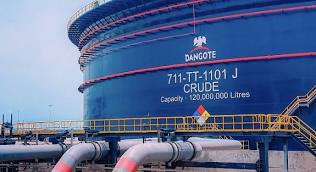
Dangote Petroleum Refinery has dismissed allegations that petroleum products exported from its facility are being shipped back into Nigeria through the offshore trading hub in Lomé, Togo, describing the claims as inaccurate and commercially illogical.
In a statement issued on June 23, the refinery said reports suggesting its products were re-entering the Nigerian market through ship-to-ship trading operations in Lomé were not supported by available trade data or established commercial practices.
ALSO READ: DSS orders probe into courtroom scuffle following remand of Omoyele Sowore
The company maintained that facilitating the return of its own exported products would contradict its objective of serving as a major supplier to the domestic market.
It added that such a process would increase operational costs and undermine the competitiveness of its products.
According to the refinery, transporting petroleum products from its facility to Lomé and back to Nigeria would cost between $82 and $90 per metric tonne. It argued that the additional expenses associated with shipping, storage, financing and handling would significantly reduce profit margins and make the transaction unattractive.
Dangote Refinery further stated that it does not provide export discounts large enough to offset those costs or create arbitrage opportunities between export destinations and the Nigerian market.
The company stressed that there would be little commercial justification for products to leave the country only to return and compete in its primary market.
The clarification followed comments attributed to Matthew Tracey-Cook of S&P Global Commodity Insights during a webinar organised by the Major Energy Marketers Association of Nigeria. He was reported to have said that a large proportion of fuel imported into Nigeria between March and May originated from Dangote Refinery and was routed through Lomé before returning to Lagos.
ALSO READ: Makinde imposes 16-hour curfew across 10 LGAs
Responding to the claims, the refinery said it maintains detailed records covering product sales, vessel nominations, lifting locations, counterparties and declared destinations.
It added that contractual obligations and compliance procedures prevent any deliberate facilitation of re-importation activities.
The debate comes as petrol imports into Nigeria increased in May despite growing domestic refining capacity.
Data from the Nigerian Midstream and Downstream Petroleum Regulatory Authority showed that average daily petrol imports rose to 5.9 million litres from 3.7 million litres recorded in April.
📢 Stay Updated — Join Our WhatsApp Channel
💬 Be Part of Our WhatsApp Community
Join our WhatsApp Channel for curated updates, breaking stories, and exclusive insights from our newsroom.
📲 Join 👉 NRTC WhatsApp Channel
However, local refineries remained the dominant source of supply, producing 41.5 million litres daily and accounting for nearly 88 per cent of petrol supplied across the country during the month.