








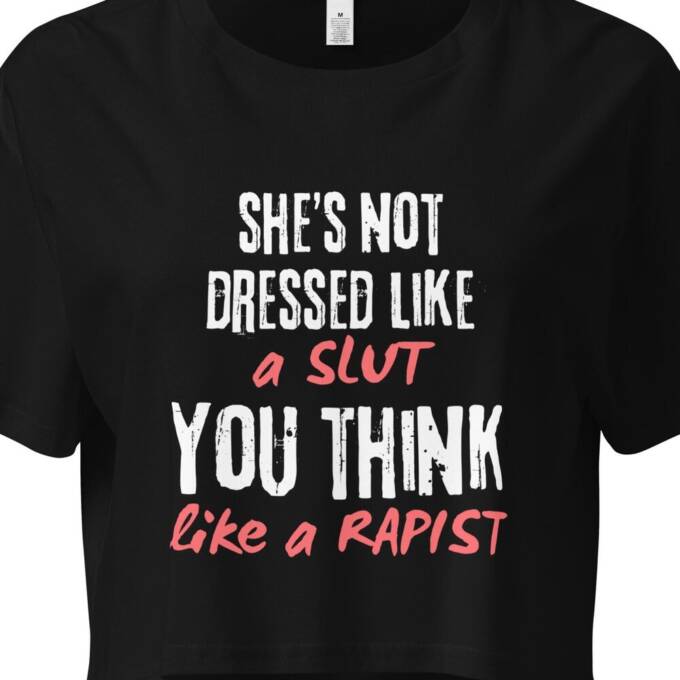
Recently, I wrote an article criticizing the insensitivity of society in assault cases, especially around issues of clothing and morality. I discovered that people tend to blame the victim more than the violator. They ask, what was she wearing? This question is not only insensitive but reveals a more underlying truth. People always assume that the victim of sexual abuse is always female gender. Men rarely face moral scrutiny for their clothing choices. This reveals that these judgments are less about morality and more about policing women’s bodies.
In the process of discussion, this question came up: Does the choice of clothes have anything to do with immorality? My answer was a solid NO. Before I go further into my explanation, I would like you to understand that morality is purely subjective. Whether you fail to realize it or not, it changes. It also evolves.
Morality across cultures
In some cultures, for instance, the Yoruba culture, as a morally upright and properly trained child, you are expected to kneel or prostrate before your parents or any other elder to greet. It is seen as a sign of respect and good home training. However, in Western countries such as America, children greet their parents or elders in casual and affectionate ways. Such greetings would, however, be considered disrespectful in a place like Japan or Nigeria.
Morality is subject to trends, time, and evolution. For instance, slavery. Though you cannot absolutely classify slavery as good or bad, one could definitely argue that at that time, to the benefitting societies in the colonial era, it was moral. However, it is now universally accepted as one of the most inhumane actions of man. Also, arranged marriage, though not necessarily classified as either good or bad, was a generally accepted and practiced culture a long time ago. It is, however, obsolete and largely criticized now.
In essence, morality is socially constructed. It is whatever a group of people accepts as moral that is considered moral. So morality isn’t only subjective and prone to evolution, it is also influenced by individual beliefs, biases, and opinions. However, while morality evolves and is subjective, there are some harmful actions that remain universally condemned. For instance, assault, corruption, dishonesty, and oppression.
Clothing in historical context
Now to the main question: Does the choice of clothes have anything to do with morality?
Absolutely not. Let us take a quick dive into history, shall we? Long before westernization and the event of colonialism, young Igbo women often wore a short tied wrapper around the waist and a crop-style cloth across the chest, leaving much of the body bare but adorned with coral or glass beads at the neck, waist, wrists, and ankles, along with camwood or chalk markings for beauty and ritual purity. This youthful style symbolized maidenhood, vitality, and readiness for dance or courtship. Older or married women, by contrast, dressed more modestly with longer, double-layered wrappers that reached below the knees, sometimes paired with a head tie, and heavier bead adornments to signify maturity, responsibility, and social standing. The distinction in attire clearly marked age, status, and moral expectations within the community. Now, let’s get into our current reality…
Fashion and clothing today
Today, the fashion industry is filled with crop-tops, mini-skirts, baggy jeans, baggy shirts, and countless other styles. Clothing is also tied to identity groups. For example: the alte geng, the bohemian crew, Goth, vintage, punk, Y2K, street wear, hipster, and more.
In Nigeria, a lot of the older generation value morals and principles that have been passed down through generations, and so any distortion in their norms would most likely be termed immoral. I strongly believe that most of their resistance stems from fear and dogmatic adherence to tradition and religious precedents. It also comes from fear of punishment instilled by parents and society. Additionally, there is fear of not being accepted by society or of “what will people say.”
ALSO READ
What am I trying to say? A lot of the dressings and accessories that we would normally judge a person for wearing, e.g., short skirts, waist beads, anklets, etc., are ironically rooted in tradition. Yet, we have become western-washed, bound by society’s conventions and opinions, and fear of being different. As a result, we now see representations of our culture as immoral or indecent. This further reiterates my point that morality is subjective and evolves. The irony is that what was once traditional and accepted has been rebranded as “indecent” because of Western influence and society’s fear of difference.
Religion and appropriateness
It is also important to acknowledge the role of religion. In many faith traditions, clothing standards are set for worship as a sign of reverence, not morality in everyday life. For instance, moderation in dress is expected in church or mosque, but those standards do not apply in a club or at a beach. To confuse religious dress codes with universal morality is misleading. They are context-specific expressions of respect, not indicators of moral uprightness.
Global perspective
Globalization and social media have accelerated fashion diversity. Styles cross cultures instantly. For instance, a crop top in Lagos may be seen as rebellious, but in Los Angeles, it is casual wear. Morality cannot hinge on something so fluid and context-dependent. What is considered “indecent” in one society may be ordinary in another. This proves that clothing is not a reliable measure of morality.
Victim-blaming and blame-Shifting
Conversely, questioning the outfit of a victim of sexual assault is not only unreasonable but irrelevant. It points out a broader truth: people would always blame someone except the actual offender. It is not just unjust but also harmful. Linking morality to clothing perpetuates victim-blaming and shifts responsibility from the violator to the victim. A person’s outfit has nothing to do with their violation but rather the moral compass and psychopathy of the offender. Period.
You might argue that “indecent dressing provokes immorality.” This is flawed reasoning. Immorality lies in the response, harassment, assault, or disrespect, not in the clothing itself. To claim otherwise is to excuse harmful behavior and deny accountability.
Conclusion
In summary, a person’s dressing has nothing to do with their moral uprightness or immorality. Especially in today’s world, where people now prefer bolder and unconventional outfits, clothing reflects personality and context, not morality. Your dressing becomes indecent only when it is substantially offensive or not appropriate for the occasion.
Morality is measured by how we treat others, not by the fabric on our skin.