
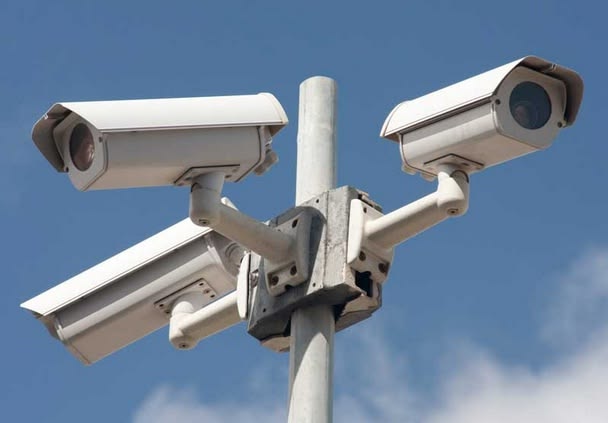
Nigeria leads Africa’s artificial intelligence surveillance spending with over $470 million invested in facial recognition and automatic number plate recognition systems.
The investment represents the largest share of the continent’s minimum $2.1 billion spending across 11 countries, according to the Institute of Development Studies’ March 2026 report.
Nigeria has deployed 10,000 smart cameras, surpassing Mauritius with $456 million for 4,143 cameras and Kenya with $219 million for 2,000 cameras.
Other African nations with significant surveillance investments include Zambia with $210 million for 1,600 cameras, Uganda with $189 million for 5,000 cameras, and Senegal with $167 million for 500 cameras.
Mozambique invested $147 million for 450 cameras, while Egypt allocated $58 million for 6,000 cameras as part of the continent-wide spending.
Chinese firms dominate the supply chain for surveillance equipment across Africa, often providing funding through soft loans to recipient countries.
ALSO READ
The study found that actual investment totals likely exceed official estimates due to secrecy surrounding procurement contracts and deployment details.
Despite 5 to 10 years of deployment across the continent, the report found scant evidence of measurable crime reduction or terrorism prevention linked to surveillance technology.
The study also noted few documented cases of surveillance-aided prosecutions, highlighting the absence of legal frameworks balancing security needs with human rights protections.
The report demands dedicated smart surveillance laws mandating court warrants, independent oversight bodies beyond government control, and transparency reporting.
Nigerians have questioned the efficacy of such technology, with opposition figure Peter Obi criticizing insecurity management despite the deployment of tracking tools.
Minister of Communications and Digital Economy Bosun Tijani recently admitted that criminals evade the NIN-SIM linkage system by using unconventional methods outside standard telecom networks.
The massive spending yields questionable security returns, fueling debates on oversight, rights safeguards, and the genuine crime-fighting impact of expanding surveillance infrastructure.