
Dr. Henry Beecher, a U.S. Army anesthesiologist, ran out of morphine during battle. To calm wounded soldiers, he injected them with saltwater, telling them it was morphine. Many soldiers reported pain relief, showing how belief alone reduced suffering. Do you know that sometimes, taking a pill with no medicine at all can make people feel better?
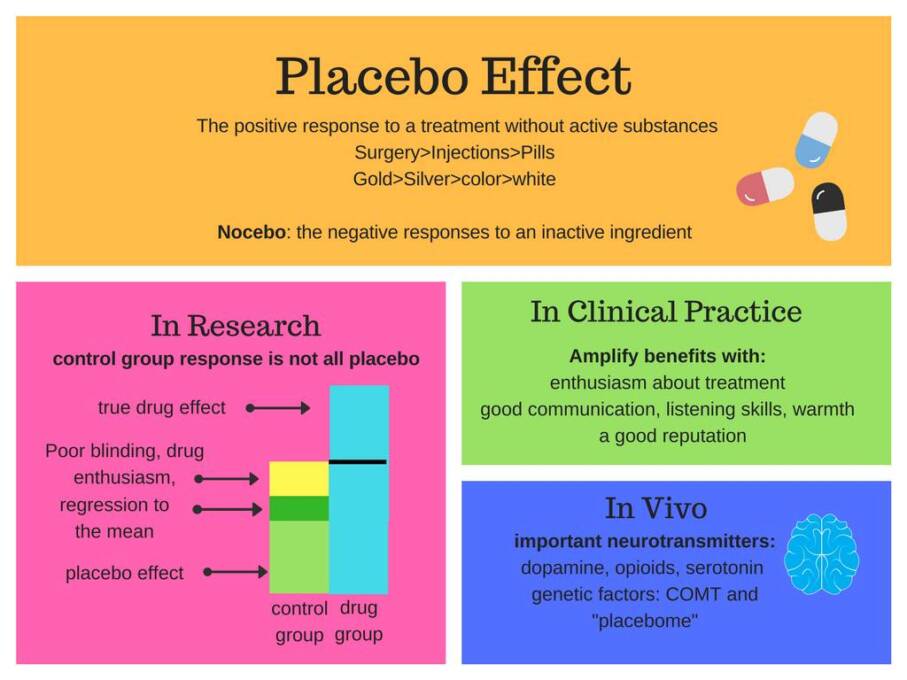
The placebo effect is the phenomenon where people experience real improvements in health or well-being. This happens simply because they believe they are receiving treatment, even if the treatment has no active ingredients. The word placebo comes from the Latin phrase meaning “I shall please”; it was originally used in religious contexts. It entered medicine in the 18th century to describe remedies given more to comfort than to cure. Expectation drives its core; patients who believe they’re being treated release chemicals like endorphins. This reduces pain or improves mood, showing how belief itself can trigger genuine physical changes. The placebo effect proves that sometimes, faith is stronger than pharmaceuticals.
ALSO READ
The placebo effect works because our brains are powerful storytellers. If we believe we’re healing, our body sometimes plays along, releasing feel-good chemicals like endorphins. Think of it like a mental trick; your brain convinces your body to feel better. For example, a parent’s kiss on the knee of a child automatically makes the pain of an injury disappear. Sometimes, the cure isn’t in the pill, it’s in the belief.
Studies show that the placebo effect can produce measurable improvements in health, with response rates ranging from 20% to over 50%, depending on the condition. For example, meta-analyses of clinical trials reveal that in pain-related studies, up to 30–40% of patients report reduced symptoms after receiving placebos. In depression trials, placebo groups often show improvements comparable to 30% of those on active medication. Research also highlights that the effect is influenced by factors such as pill size, color, and even the perceived cost of treatment. Larger, brightly colored, or “expensive-looking” placebos tend to produce stronger responses. These statistics underline how belief and expectation can trigger real biological changes. The placebo effect stands as a powerful force in both medicine and psychology.

The placebo effect is more than a medical curiosity; it’s proof that our minds hold a hidden superpower. With belief, expectation, and hope, the brain can release its own antidotes, soothe pain, and spark healing. It’s as if we carry an invisible pharmacy that can be activated by trust and imagination. This reveals profound truths. In a world where we often look outward for cures, the placebo effect reminds us that sometimes the most powerful medicine lies within.
Our minds are not just storytellers; they are healers, tricksters, and protectors. They are capable of giving us a mental vaccine against despair. And that might be the most extraordinary prescription of all.