



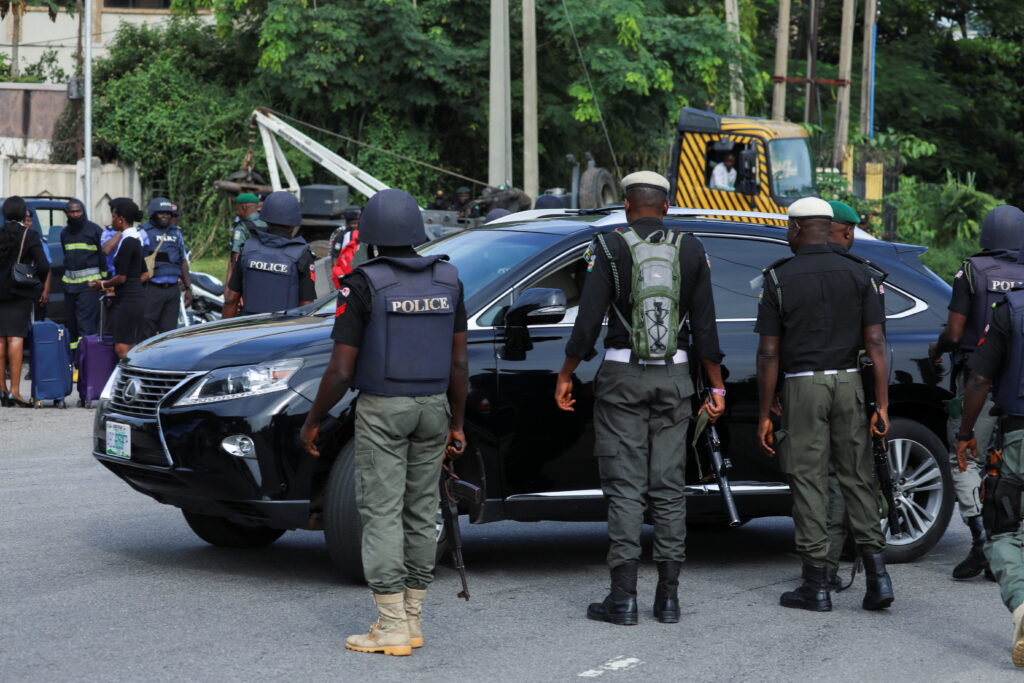
For years, police salaries in Nigeria have remained a subject of public discussion, particularly because officers of the Nigeria Police Force (NPF) are responsible for maintaining law and order, protecting lives and property, preventing crime, and responding to security challenges across the country.
Questions about how much police salary is in Nigeria have also featured in wider conversations about policing, especially concerns over working conditions, bribery and extortion at checkpoints and during investigations. These concerns were among the broader frustrations that came to the forefront during the #EndSARS protests in 2020.
Police salaries are generally determined by rank and applicable government salary structures. An officer’s overall earnings may also include allowances and other benefits. Police are paid under the applicable salary structure, with earnings varying according to rank, grade level, years of service and applicable allowances.
Nigeria Police salary by rank
Available figures online indicate that police salaries vary considerably depending on an officer’s rank and level of service. However, some of these figures could not be independently verified at the time of reporting and should therefore be treated as estimates rather than official salary figures.
Nigeria Police Salary by Rank (2026)
| Rank | Monthly Pay |
|---|---|
| Inspector-General of Police (IGP) | ₦1,300,000 – ₦1,700,000 |
| Deputy Inspector-General of Police (DIG) | ₦900,000 – ₦1,200,000 |
| Assistant Inspector-General of Police (AIG) | ₦500,000 – ₦800,000 |
| Commissioner of Police (CP) | ₦300,000 – ₦700,000 |
| Deputy Commissioner of Police (DCP) | ₦250,000 – ₦350,000 |
| Assistant Commissioner of Police (ACP) | ₦200,000 – ₦300,000 |
| Chief Superintendent of Police (CSP) | ₦180,000 – ₦250,000 |
| Superintendent of Police (SP) | ₦170,000 – ₦230,000 |
| Deputy Superintendent of Police (DSP) | ₦160,000 – ₦210,000 |
| Assistant Superintendent of Police (ASP) | ₦150,000 – ₦200,000 |
| Inspector of Police | ₦100,000 – ₦180,000 |
| Sergeant Major | ₦90,000 – ₦130,000 |
| Sergeant | ₦80,000 – ₦120,000 |
| Corporal | ₦70,000 – ₦100,000 |
| Constable (Recruit) | ₦50,000 – ₦70,000 |
| Constable (GL 03) | ₦70,000 – ₦90,000 |
The figures above are basic salary estimates and do not include allowances or other benefits.
Salary figures confirmed by a serving police officer
To establish how closely figures available online reflect the actual earnings of serving personnel, News Round The Clock (NRTC) contacted a serving police officer.
The officer, who requested anonymity, provided a different set of figures for some ranks. The information supplied to NRTC was as follows:
- Police Constable (PC): ₦118,000
- Corporal: ₦120,000 – ₦122,000
- Sergeant: ₦130,000 – ₦140,000
- Inspector I: ₦170,000
- Inspector II: ₦240,000 – ₦249,000
The officer provided these figures as an indication of current earnings. They should not, however, be regarded as an official salary table unless independently confirmed by the appropriate government authorities.
ALSO READ: Army Salary in Nigeria (2026): Monthly Pay by Rank and Allowances
Police allowances and benefits
A police officer’s monthly earnings may extend beyond the basic salary. Depending on rank, duties, location and applicable government policies, officers may be entitled to different allowances and benefits.
These include:
- Feeding allowance
- Transport allowance
- Clothing allowance
- Uniform allowance
- Housing allowance
- Risk allowance
- Duty allowance
- Operational allowance
- Special trade allowance
The exact amounts attached to many of these allowances could not be independently verified at the time of reporting.
As a result, the total take-home pay of an individual officer may differ from the basic salary figures listed above.
How police salaries changed in 2024
The Federal Government’s review of public-sector salaries has also affected discussions around the Nigeria Police salary structure.
As of August 2026, the Federal Government has reaffirmed its intention to improve the welfare of personnel of the Nigeria Police Force through a review covering salaries, allowances, insurance, pension-related benefits and other welfare packages.
The development followed a meeting of the Ministerial/Stakeholders Committee on the Review of the Nigeria Police Force Salary Structure, Welfare Package and Settlement of Outstanding Benefits held in Abuja on August 4, 2026.
📢 Stay Updated — Join Our WhatsApp Channel
💬 Be Part of Our WhatsApp Community
Join our WhatsApp Channel for curated updates, breaking stories, and exclusive insights from our newsroom.
📲 Join 👉 NRTC WhatsApp Channel
According to a statement attributed to the Ministry of Police Affairs, the committee is examining existing welfare arrangements and considering measures aimed at addressing longstanding concerns affecting serving and retired police personnel.
The committee is also reviewing regular and non-regular allowances to determine whether they adequately reflect current economic conditions, the demands of policing and applicable public service regulations.
Other issues considered include outstanding pension arrears, death benefits, group life insurance liabilities, group personal accident claims and other welfare obligations requiring government intervention.
Housing remains a major welfare concern
Accommodation was identified as one of the significant welfare challenges facing police personnel.
The committee emphasised the importance of developing a more realistic housing support system, noting that better access to decent accommodation could improve officers’ welfare, morale and productivity.
Members also discussed the need to harmonise existing allowances, remove duplication and ensure that recommended payments are consistent with public service rules, alongside operational allowances specifically justified by the nature of police work.
The committee further considered alternative and sustainable funding arrangements that could support the implementation of approved welfare programmes beyond annual budgetary allocations.
Its technical team was directed to review the proposed allowances, consolidate similar items, provide explanations for discontinued allowances and prepare an updated schedule for consideration.
A comprehensive draft report is expected to be presented at a subsequent committee meeting before the recommendations are submitted to the government.
Does police salary increase with promotion?
Yes. Police officers do not necessarily remain on the same level of pay throughout their careers. Earnings can change as an officer progresses through the ranks and advances within the applicable salary structure.
Factors that may influence an officer’s earnings include:
- Promotion
- Rank and grade level
- Years of service
- Training and professional development
- Applicable allowances
- Nature of duties and responsibilities
However, the exact impact of each factor depends on the applicable government salary structure and employment conditions.
Why does police salary differ by rank?
The difference in pay between police ranks is largely connected to the level of responsibility attached to each position.
Senior officers generally have broader responsibilities, including supervising personnel, managing police formations and commands, making operational decisions, handling administrative duties and overseeing major security operations.
As officers rise through the ranks, their responsibilities and decision-making authority generally increase, which is reflected in the applicable remuneration structure.
Frequently asked questions
How much is police salary per month in Nigeria?
Available figures indicate that monthly police pay varies by rank. A serving officer contacted by NRTC gave a figure of ₦118,000 for a Police Constable, while the online estimates listed above put Constable pay at between ₦50,000 and ₦90,000, depending on the category.
What salary structure is used by the Nigeria Police Force?
Police salaries are determined by the applicable government salary structure, with rank, grade level and step influencing earnings.
Who is the highest-paid police officer?
The Inspector-General of Police is the highest-ranking officer in the Nigeria Police Force and therefore occupies the highest position in the rank structure.
Does police salary increase after promotion?
Yes. Earnings can increase as an officer progresses through the ranks and advances within the applicable salary structure.
What allowances do police officers receive?
Police officers may receive allowances covering areas such as housing, transport, feeding, clothing, uniform, risk, duty, operations and special trades, depending on applicable policies.
ALSO READ: Immigration Salary in Nigeria (2026): Ranks and Monthly Pay
Conclusion
Police salary in Nigeria varies according to rank, grade level, years of service and applicable allowances. While figures circulating online provide an indication of what officers may earn, some amounts have not been independently verified and should not be treated as official figures without confirmation from the relevant authorities.
For rank-and-file personnel, allowances and welfare benefits can also make a significant difference to overall earnings.
Meanwhile, the Federal Government’s ongoing review of police salaries and welfare packages could lead to changes in the remuneration structure and other benefits available to serving and retired officers.
As discussions around police welfare continue, the outcome of the government’s review will be important in determining whether officers receive a compensation package that better reflects the economic realities and demands of policing in Nigeria.