
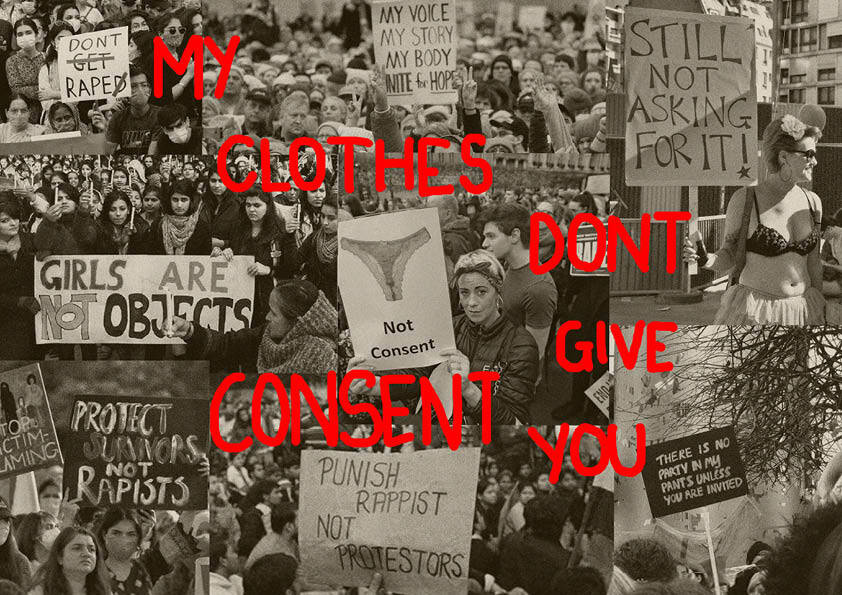
Most times when we hear of sexual assault cases, a common insensitive question asked is, “What was she wearing?” Well, if you are among the category of people who ask such questions, news flash: fabric isn’t consent.
Society has normalized shifting the blame to the victims of sexual assault and not the abuser. This is why a pitiful shadow of decency would raise a defense such as “they were in a club and dressed enticingly.” The blatant truth is, whether we realize it or not, the fault is never the victim’s. It is the violator’s, someone who lacks self-control.
ALSO READ
In truth, many people raise such questions because of existing stereotypes, such as “men cannot get raped.” Conversely, because women’s fashion tends to be more adventurous and extravagant than that of men, it is so much easier to assume it’s the dressing. Let me ask you: when a man gets abused sexually, what do you then blame? Certainly not the dressing. This just points out the overwhelming truth of double standards, gender roles, and patriarchy. Men can be victims too.
We fail to realize that every time we ask questions like “Where was she when she got violated?” “What were they wearing?” “What were they doing?” We are gradually erasing the responsibility of the offender to answer for their crimes. What if it were your brother, sister, mother, cousin, etc.?
When will we wake up as a society and realize that, due to culture and pre-existing precedents, our society has degenerated to value cultural morality even when it is insensitive and unreasonable? So, just because she does not dress in a way that is approved by you or your cultural values, it is okay for her to be violated? How does that make you any different from the violator?
When will we actually wake up and blame the violator and not the victim? Clothing has never been a protection against sexual violence. Many documented cases show victims were fully covered when assaulted. See Jessica Long’s testimony (UN exhibit, 2022): she was wearing a blue dress, black tights, and boots when she was drugged and raped. Her story was part of the “What Were You Wearing?” exhibit in New York. The exhibit highlighted how survivors are often blamed based on their clothing. Also consider DOVE Center’s “What Were You Wearing” exhibit. Survivors displayed the actual outfits they wore during assaults, ranging from jeans and hoodies to professional work attire. The exhibit’s purpose was to dismantle the myth that clothing provokes rape.
If you blame the outfit rather than the offender, well, all I can say is wow. The outfit should never be a defense against such acts. Clothing has never been and will never be consent. This is 2026; if you still think this way, then you must live under a rock or have been dogmatically influenced by outdated cultural and religious values. Let’s face it, there is a need for restructuring and reevaluation of our so-called cultural and religious values. Low-key, most of them are passed down patriarchal and misogynistic ideologies against women, but y’all aren’t ready for that conversation.
In conclusion, an outfit is not consent. Outright and mutual consent is consent. If you believe that a person being unapologetic and bold in their dressing is a ploy to attract a sexual partner, you need help. In what world does dressing how you like and for yourself equal “Hey, I need a sexual partner”? We need to wake up and stop shifting blame!
I, of course, believe in and understand the place of moderation, but should we now, because of that, blame the victim and not the violator? I just cannot comprehend how a person could be so insensitive as to blame the outfit and not the offender. We need to do better as a society and actually think. Clothes are fabric. Consent is a choice. Let’s stop confusing the two. Until we stop blaming outfits, we will never hold offenders accountable