

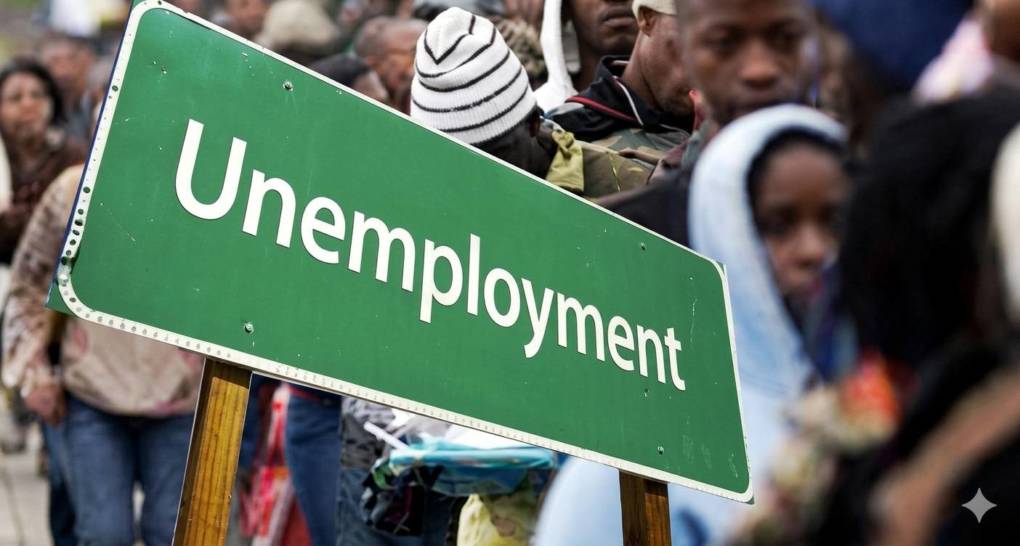
South Africa’s official unemployment rate rose to 32.7% in the first quarter of 2026, up from 31.4% in the fourth quarter of 2025, according to data released by Statistics South Africa on Tuesday.
The 1.3 percentage point increase was driven by a simultaneous decline in employment and a rise in the number of unemployed persons.
Employment fell by 345,000 to 16.8 million during the quarter, while the number of unemployed persons rose by 301,000 to 8.1 million. The total labour force contracted marginally by 44,000, and the labour force participation rate declined to 59.0%.
Job losses were recorded across both formal and informal sectors. Formal sector employment dropped by 189,000, informal sector jobs fell by 127,000, and household employment declined by 28,000, indicating broad-based deterioration rather than weakness confined to a single segment.
📢 Stay Updated — Join Our WhatsApp Channel
💬 Be Part of Our WhatsApp Community
Join our WhatsApp Channel for curated updates, breaking stories, and exclusive insights from our newsroom.
📲 Join 👉 NRTC WhatsApp Channel
The number of people outside the labour force rose by 164,000 to 17.3 million, with discouraged job seekers accounting for 178,000 of that increase. The absorption rate fell to 39.7%, down 0.9 percentage points from the previous quarter.
ALSO READ
Broader labour underutilisation indicators worsened alongside the headline figures. The measure combining unemployment and underemployment rose to 35.9%, while the composite labour underutilisation index increased by 1.8 percentage points. The working-age population expanded by 498,000 compared to the same period in 2025, but job creation did not keep pace.
South Africa has maintained one of the highest unemployment rates globally for several years, with structural constraints including weak investment, electricity shortages, and sluggish growth in manufacturing and mining continuing to limit job creation.
The latest figures underline the gap between labour supply and the economy’s capacity to absorb new entrants, a challenge that reform efforts by authorities have not yet resolved.
🔍 Explore More
- NRTC English Knowledge Base – Learn, improve, and sharpen your English skills.
- Top Stories From Around the World – Stay informed with the latest global news and insights.
- Specially Curated Listicles – Discover interesting lists, guides, and deep dives selected for our readers.
- Stay Updated: Join our mailing list and never miss the latest articles and updates from NRTC.


