The United Nations Office on Drugs and Crime (UNODC) has reaffirmed its unwavering commitment to bolster its collaborative efforts with Nigeria’s Economic and Financial Crimes Commission (EFCC).
The support was in the collective battle against corruption, cybercrime, illicit financial flows, and various forms of organised crime.
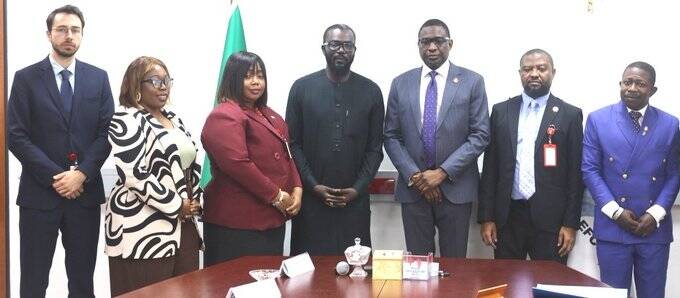
This pledge was made during a courtesy visit by a UNODC delegation, led by Country Representative Cheick Ousman Toure, to EFCC’s Chairman, Ola Olukoyede, at the Commission’s corporate headquarters in Abuja on Tuesday.
Toure highlighted UNODC’s evolving strategic approach to its partnership with Nigeria, underscoring the nation’s pivotal role in the implementation of global anti-corruption frameworks, including the United Nations Convention against Corruption (UNCAC) and the United Nations Convention against Transnational Organised Crime (UNTOC).
“For us in UNODC, we have developed a new partnership approach. Nigeria has been a leader, not only in ratifying key conventions but also in contributing to their documentation,” Toure stated.
He recounted previous close collaborations with the EFCC, particularly in anti-money laundering initiatives in 2014 and 2020.
“Now, we are moving from ad-hoc interventions to a jointly developed country programme, which has been approved by the UN as our five-year blueprint for Nigeria,” he added.
Acknowledging recent global funding challenges, including anticipated cuts in U.S. foreign aid from October 2025, Toure emphasised the imperative for more sustainable and regionally driven solutions.
He stressed the importance of assisting Nigeria in combating illicit financial flows, which annually cost the African continent billions of dollars, and urged Nigeria’s leadership in this fight to resonate at the sub-regional level.
The UNODC Country Representative further pinpointed cybercrime, illegal mining, and the necessity for more robust enforcement at the state level as critical areas of focus.
He committed to UNODC’s readiness to assist the EFCC in bridging operational gaps, fostering greater regional cooperation, and enhancing intelligence-sharing mechanisms.
READ ALSO
“We see an opportunity to work with EFCC on cybercrime, given that Nigeria is the only African country aligned with the Budapest Convention.
“We also want to help close the gaps in local enforcement so that EFCC operatives can be more effective at the state and community levels,” Toure elaborated.
In response, Olukoyede expressed his appreciation for the longstanding partnership between the two organizations, signaling the Commission’s eagerness to broaden the scope of cooperation in light of emerging trends in organized crime.
“Our doors are always open to this kind of collaboration. Over the years, EFCC has tracked the record of UNODC, just as you have tracked ours. It is now imperative to broaden our partnership, especially considering the new dynamics in transnational crimes,” Olukoyede affirmed.
Olukoyede also underscored the EFCC’s dedication to reducing its reliance on external aid by fostering indigenous initiatives.
“We believe that we do not necessarily have to depend on foreign aid. We are already developing domestic mechanisms to fund some of our operations and we will continue to strengthen these efforts,” he stated.
Highlighting the EFCC’s pivotal role in the Network of Anti-Corruption Institutions in West Africa (NACIWA), the EFCC boss called for intensified regional collaboration to combat transnational organised crime in West Africa.
He advocated for a secure platform for intelligence sharing across jurisdictions, urging UNODC to facilitate its establishment.
Olukoyede also identified illegal mining as a significant channel for money laundering, noting the Commission’s proactive steps to address this issue.