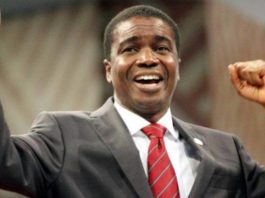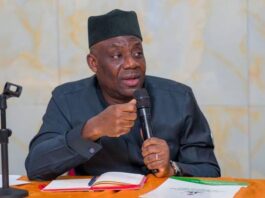

The question of who qualifies as a journalist has come under sharp debate following comments by Lérè Olayinka, Senior Special Assistant on Media to FCT Minister Nyesom Wike.
Speaking on ARISE TV, Olayinka claimed that Chief Dele Momodu, the renowned publisher of Ovation International, is not a journalist because he studied Yoruba rather than journalism.He dismissed Ovation as a mere “photo book,” arguing that publishing it does not qualify as journalism.
But this position ignores the broader nature of journalism, both in Nigeria and globally.
Journalism is not a field restricted solely to those with degrees in Mass Communication or Journalism.
According to the Nigerian Press Council, a person qualifies as a journalist if they either hold a recognized academic qualification or have been trained under seasoned journalists in a recognized media organization and earned a Certificate of Experience.
Chief Dele Momodu’s career easily meets these criteria.
He worked as a staff writer at African Concord (1988–1989), rose to News Editor at Weekend Concord, and became Editor at Classique Magazine before launching Ovation International.
These roles, combined with decades of active publishing, firmly place him within the ranks of experienced journalists.
The longstanding debate over journalism qualifications, especially within academic institutions like the University of Lagos (UNILAG), has historically centered on protecting the Mass Communication discipline.
For years, UNILAG’s Department of Mass Communication required B.A. holders in related fields like Communication and Language Arts or Linguistics to complete a Postgraduate Diploma (PGD) before enrolling in the Master’s program — a policy that sometimes caused tension with universities like the University of Ibadan (UI).
However, in practice, the journalism industry does not operate on such rigid academic boundaries.
ALSO READ
Mass Communication as a field trains individuals in various areas — journalism, public relations, advertising, photography, and more — but journalism itself has always welcomed practitioners from diverse educational backgrounds.
Editorial boards often include professionals from economics, politics, science, languages, and even agriculture, whose specialized knowledge strengthens newsroom output.
Olayinka’s dismissal of Ovation International as a “photo book” also reveals a misunderstanding of the role of photojournalism and soft news.
Photojournalism is a recognized subfield taught in journalism programs, and entertainment or lifestyle news (soft news) plays an essential role alongside hard news in informing and engaging the public.
Publications like Ovation meet the audience’s demand for human-interest stories, celebrity profiles, and cultural coverage.
Moreover, Nigeria’s journalism history is rich with contributions from indigenous language media.
Yoruba-language newspapers like Ìwé Ìròhìn, Alaroye, and Akede have long been part of the country’s media fabric, and broadcasters like FRCN and LTV 8 continue to deliver news in Yoruba, Hausa, Igbo, and other languages.
A Yoruba graduate, with proper in-house newsroom training, can often perform as well — or even better — than someone with only a diploma in journalism.
The broader media landscape is full of examples proving that journalism transcends academic labels.
The celebrated career of Reuben Abati, who holds a PhD in Theatre Arts, a law degree, and once chaired The Guardian’s editorial board, shows that journalistic excellence depends on skill, insight, and experience, not simply a Mass Communication degree.