





Afghan women have seen their freedoms stripped away since the Taliban’s return to power in August 2021, as the group re‑imposed its strict interpretation of Sharia law.
What had been two decades of progress in education, employment, and public life has been rolled back in less than five years, leaving Afghanistan the only country in the world where girls are banned from secondary and higher education.
13 restrictions under Taliban Sharia law
Reports from the United Nations and human rights groups document a systematic dismantling of women’s rights:
1. Loss of freedoms
Human rights monitors say Afghan women have effectively lost the right to live freely. Daily life is governed by decrees that erase their presence from public spaces and limit their autonomy.
2. Silenced in public
Under Taliban Sharia law, women are prohibited from speaking, singing, or otherwise being heard in public. This measure enforces invisibility in civic life and cultural expression.
ALSO READ: Inside the Akunyili Dynasty: Family that shaped Nigeria’s health, arts, and public service
3. Banned from recreation
Women are barred from entering public parks, gyms, salons, sports clubs, national parks, and amusement facilities. These bans cut them off from leisure, community, and even basic exercise.
4. Excluded from politics and jobs
Female participation in government and politics has been eliminated, while most professions are closed to women. This reverses gains made between 2001 and 2021, when women held parliamentary seats and worked across sectors.
5. Education denied
Girls may not study beyond the sixth grade, and women are banned from universities. The United Nations has condemned this as “gender apartheid,” stressing that Afghanistan is the only country where female education is outlawed so comprehensively.
6. Marriage age abolished
The Taliban has removed the fixed minimum marriage age, tying eligibility to puberty, which can be as young as nine. Rights groups warn this exposes girls to child marriage and lifelong vulnerability.
7. No protection from violence
Shelters for victims of domestic abuse have been dismantled, leaving women with little legal protection. Human rights researchers note that Afghan women now face violence without recourse to law or safe refuge.
8. Restricted movement
Women cannot leave home without a male guardian, known as a mahram. This rule severely limits independence and access to basic services.
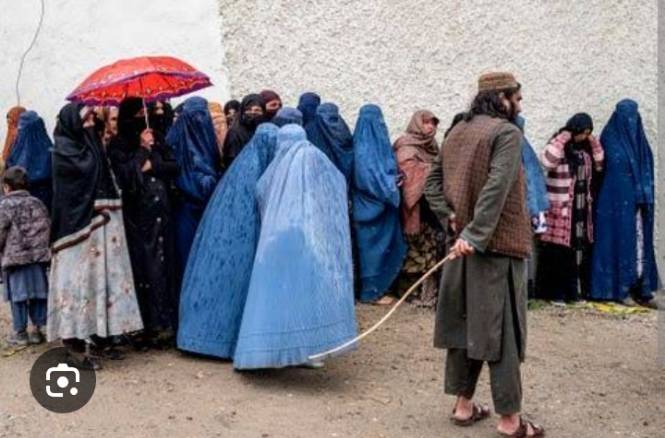
9. Mandatory face covering
Women must cover their faces in public, often with the burqa, under decrees enforced by religious police. Violations are met with punishment.
10. Travel abroad blocked
Women are barred from traveling abroad without a male custodian and a “legitimate reason,” effectively ending independent international travel.
11. Healthcare crisis
With women banned from studying medicine and cultural restrictions preventing them from seeing male doctors, many Afghan women are left untreated. The shortage of female health workers has worsened maternal and child health outcomes.
12. Driving forbidden
Women are prohibited from driving, further restricting independence and access to work, education, or healthcare.
ALSO READ: NRTC WEEKLY: Top 5 trending stories across Nigeria this week
13. Cultural censorship
Books authored by women have been stripped from libraries and bookstores, erasing female voices from Afghanistan’s cultural and intellectual life.
For Afghan women, these decrees are not abstractions but the texture of daily life. One woman told human rights researchers in 2025, “They have not just restricted our lives, they have tried to make us not exist.”
Another, interviewed by UN Women, explained, “Sometimes, I wonder how to remain hopeful in these dark circumstances… Nonetheless, I reassure myself that darkness will end soon.”
The United Nations, Amnesty International, and Human Rights Watch have condemned the restrictions as systematic discrimination. Western governments have refused to recognize the Taliban until women’s rights are restored.

Inside Afghanistan, resistance continues through underground schools, secret libraries, and women’s rights networks, though activists face harassment and arrest.
Afghanistan’s legal system has long combined Islamic law with civil codes, but the Taliban’s interpretation of Sharia is among the harshest in the world.
During their first rule from 1996 to 2001, women were banned from schools and workplaces. After their ouster, Afghan women regained rights, with millions of girls attending school and women entering universities and parliament.
That progress ended abruptly in August 2021, when the Taliban seized Kabul and reinstated the Ministry for the Propagation of Virtue and Prevention of Vice to enforce religious decrees.