The Independent National Electoral Commission (INEC) has begun preparations for the 2027 general elections, releasing a revised timetable and unveiling a sweeping drive to overhaul its procurement processes.
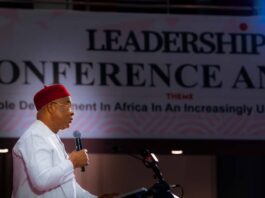
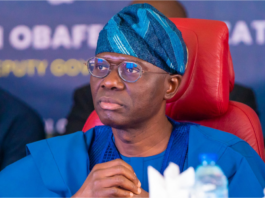
The announcements came during a three-day, high-level capacity-building workshop in Lagos, held in partnership with the Konrad-Adenauer-Stiftung (KAS).
The event signalled a strategic shift in INEC’s approach to electoral integrity, with transparent procurement positioned as the “invisible architecture” underpinning credible elections.
Under the recently enacted Electoral Act 2026, which shortened the mandatory election notice period from 360 to 300 days, INEC Chairman Prof. Joash Amupitan, shared the key election dates.
He said the Presidential and National Assembly Elections will hold on Saturday, 16 January 2027 and the governorship and State Assembly Elections will hold on Saturday, 6 February 2027.
Represented by National Commissioner May Agbamuche-Mbu, Amupitan explained that releasing the calendar early is a deliberate effort to provide clarity and certainty for political parties, security agencies, and voters alike.
Reflecting on his first 159 days in office, Amupitan stressed that INEC must move beyond “rhetoric” to actual implementation.
He highlighted procurement—often overlooked in public discussion—as a critical factor in maintaining public trust.
“When procurement is handled with integrity, it becomes the bedrock of public confidence,” he said. “When it is compromised, it becomes the fault line through which trust collapses.”
READ ALSO
Dr Adebowale Adekunle, Director-General of the Bureau of Public Procurement (BPP), echoed this point, describing procurement as the “hidden engine” of democracy.
He cautioned against “vendor dependency,” stressing that a resilient democracy must never “outsource its sovereignty” to a single supplier.
The workshop also addressed challenges arising from the compressed timelines in the Electoral Act 2026.
Amupitan described the shorter window as a “reality to be mastered,” requiring INEC to operate with the precision of a “well-calibrated machine.”
To safeguard operations against risks such as global supply chain disruptions and technology shortages, INEC is implementing early procurement planning to maximise lead time, end-to-end e-procurement systems to enhance transparency and supplier diversification to maintain institutional independence.
🔍 Explore More
- NRTC English Knowledge Base – Learn, improve, and sharpen your English skills.
- Top Stories From Around the World – Stay informed with the latest global news and insights.
- Specially Curated Listicles – Discover interesting lists, guides, and deep dives selected for our readers.
- Stay Updated: Join our mailing list and never miss the latest articles and updates from NRTC.
Mr Tobias Ruettershoff, KAS Resident Representative, reaffirmed the foundation’s long-standing support for Nigeria’s democratic progress.
He noted that election credibility begins long before ballots are cast, relying on proper management of materials, technology, and training.
Amupitan concluded by urging the Commission’s leadership to “unlearn and relearn” practices to meet Nigerians’ high expectations.
“The Nigerian people are watching,” he reminded the assembly, “and they deserve nothing less than our very best.”