



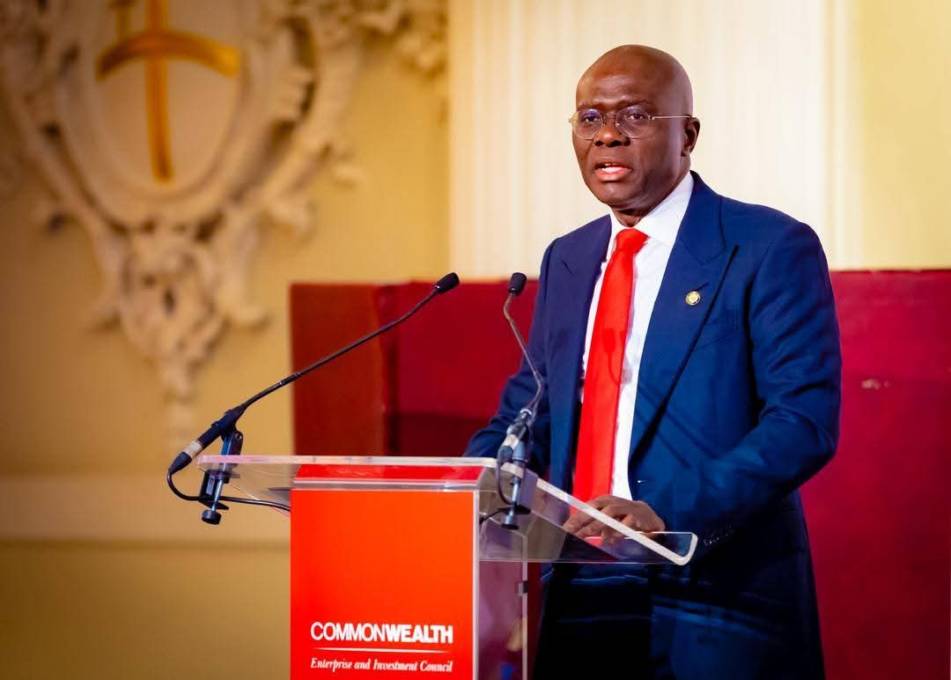
Lagos State Governor, Babajide Sanwo-Olu, has described Lagos as the preferred destination for global investment, portraying the state as a sub-national economy with the economic weight of a nation and the driving force behind Nigeria’s growth.
Speaking at the maiden Geo-Economic Optimisation Summit Lagos 2026, organised by the Citadel School of Government in Oregun, Ikeja, the governor showcased the state’s infrastructure, economic strengths, and investment opportunities to both local and international stakeholders.
The summit, themed “From South-West Nigeria to the Globe: Lagos State as a Geoeconomic Hub,” explored how Lagos can serve as a catalyst for economic transformation in South-West Nigeria and strengthen its position in the global economy.
📢 Stay Updated — Join Our WhatsApp Channel
💬 Be Part of Our WhatsApp Community
Join our WhatsApp Channel for curated updates, breaking stories, and exclusive insights from our newsroom.
📲 Join 👉 NRTC WhatsApp Channel
Sanwo-Olu stated that Lagos generates approximately one-third of Nigeria’s Gross Domestic Product and ranks as Africa’s second-largest metropolitan economy.
He noted that the state’s economic output exceeds $259.75 billion on a purchasing-power-parity basis, positioning it as one of the continent’s most influential economic centres.
READ ALSO: Eid-el-Kabir: Sanwo-Olu urges unity, compassion
Drawing inspiration from Matthew Chapter Five, where Christians are described as the “salt of the earth” and the “light of the world,” the governor said Lagos actively participates in driving economic growth rather than remaining on the sidelines.
He stressed that the state seeks to create measurable impact through strategic investments and economic engagement.
Highlighting key infrastructure projects, Sanwo-Olu pointed to the Lekki Deep Sea Port and the Dangote Refinery as major assets strengthening Lagos’ role as West Africa’s leading trans-shipment hub.
He noted that the refinery, regarded as the world’s largest single-train refinery, has a production capacity of 650,000 barrels of oil per day.
The governor also outlined progress in the state’s rail transportation network.
He explained that the Blue and Red rail lines are already operational, while plans for the Green Line, which will connect the Lekki-Epe Expressway corridor to Lagos Island, are advancing steadily.
He added that the Purple Line, designed to connect Mowe in Ogun State to Lagos, is also progressing and has attracted strong interest from both local and international investors.
According to Sanwo-Olu, Lagos remains the leading technology hub in Africa, hosting the continent’s largest concentration of startups.
He added that the city’s technology ecosystem was recognised as the fastest-growing in the world in 2025, further strengthening its attractiveness to investors.
On energy development, the governor said Lagos has enacted its own electricity law to create a competitive internal power market capable of supporting industrial expansion and sustainable economic growth.
Beyond infrastructure and industry, he emphasised the importance of culture and entertainment to the state’s economy.
He noted that Lagos, as the home of Nollywood, is collaborating with the federal government and private-sector stakeholders to expand tourism and strengthen the creative economy.
Sanwo-Olu credited the economic progress of Lagos to reforms initiated by President Bola Tinubu during his tenure as governor of the state.
He used the opportunity to encourage investors and development partners to take advantage of the opportunities available in Lagos.
“Lagos is open, Lagos is ready, and Lagos rewards those who build with us,” the governor said, adding that the state is determined to remain competitive in the global marketplace.
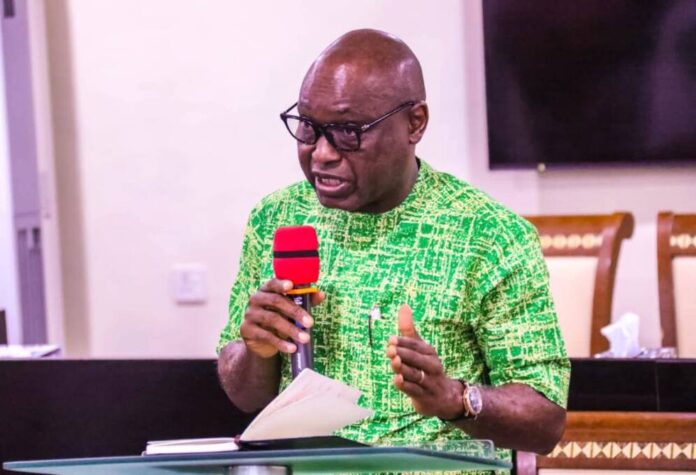
In his keynote address, Tunde Bakare, founder and board chairman of the Citadel School of Government, argued that Nigeria’s long-term success depends on the alignment of three key pillars: the geosocial, geopolitical, and geoeconomic dimensions of national development.
Bakare observed that Nigeria has often struggled because these three elements have not been effectively aligned.
He stated that while the country possesses immense social diversity and economic potential, weaknesses within its geopolitical structures have frequently generated tensions and hindered progress.
He explained that one of the long-term goals of the Citadel School of Government is to promote a governance model that harmonises Nigeria’s social diversity while unlocking its economic potential through effective geopolitical structures.
Commending Lagos as a successful example of institutional continuity and strategic planning, Bakare described the state as a proof of concept for sustainable development.
He suggested that the Lagos model could be replicated across the country to create multiple centres of prosperity.
According to him, each of Nigeria’s six geopolitical zones could eventually develop into a thriving economic hub comparable to Dubai, while leveraging its unique regional strengths.
The Executive Director of the Citadel School of Government, Exemoaholo Omoakhalen, said the summit provided an important platform for examining Lagos State’s economic potential.
He noted that the discussions would contribute to the institution’s ongoing research and policy development initiatives.
READ ALSO: Sanwo-Olu appoints substantive deputy Vice-chancellors for LASUSTECH
The event attracted several high-profile guests, including Gloria Diri, Senator Konbowei Benson and his wife, members of the House of Representatives including Fred Agbedi, Mitema Obordor, and Marie Ebikake.
Other attendees included Justice Matilda Ayemieye, Rt. Hon. Monday Bubou, members of the Bayelsa State Executive Council, Rev. Fr. Joseph Opelema, traditional rulers, and prominent Christian leaders.