



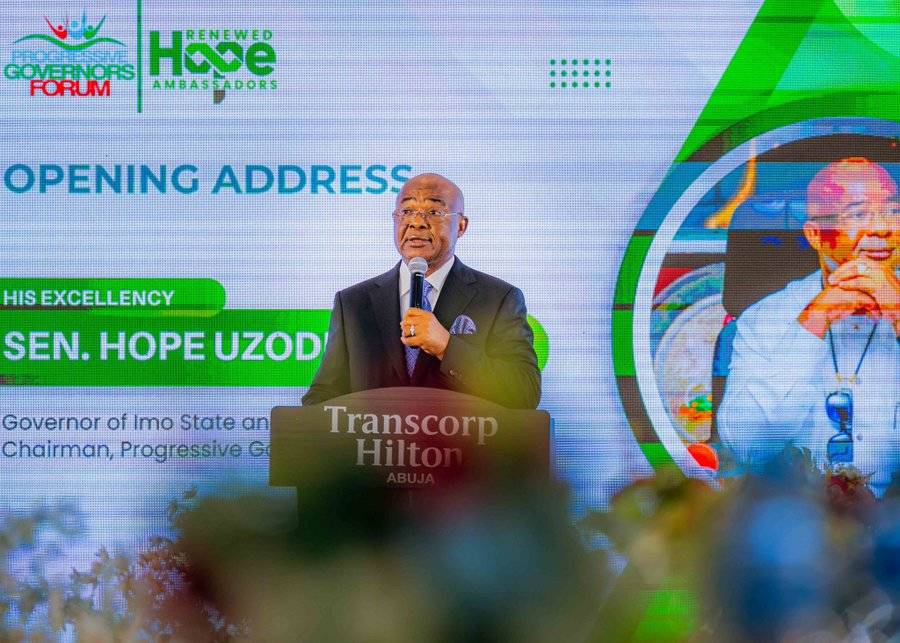
Imo State Governor, Hope Uzodimma, has said Nigeria is currently undergoing what he described as a two-phase economic journey: first, “foundational repair”, and then a gradual return to growth across key sectors.
Uzodimma, who also chairs the Progressive Governors’ Forum, made the remarks on Monday during a high-level diplomatic engagement in Abuja.
The session brought together members of the diplomatic corps and development partners and was themed “Deepening Partnership for Democratic Stability, Investment, Development Cooperation and Inclusive Prosperity under the Renewed Hope Agenda.”
READ ALSO: “Tinubu’s progressive leadership transforming Nigeria’s economy” – Uzodimma
It was organised by the PGF in partnership with the Renewed Hope Ambassadors.
Speaking to diplomats, Uzodimma pointed to two major policy decisions under the administration of President Bola Tinubu, the removal of fuel subsidy and the floating of the naira, as turning points in Nigeria’s economic direction.
📢 Stay Updated — Join Our WhatsApp Channel
💬 Be Part of Our WhatsApp Community
Join our WhatsApp Channel for curated updates, breaking stories, and exclusive insights from our newsroom.
📲 Join 👉 NRTC WhatsApp Channel
He described both moves as painful but necessary steps aimed at dismantling what he called a long-standing system that encouraged waste and corruption in the subsidy regime.
National development
According to him, the reforms have allowed government resources to be redirected towards more productive areas of national development, despite the short-term economic pressure they created.
“The trajectory of the Federal Government under President Bola Ahmed Tinubu is one of foundational repair, followed by early signs of economic recovery,” Uzodimma told the diplomats.
“The Renewed Hope Agenda is not a slogan; it is a structured policy direction.”
The governor also outlined what he described as early indicators of progress under the reforms.
READ ALSO: Uzodimma launches digital hub to improve access to govt information
These, he said, include improved fiscal stability, supporting ongoing infrastructure development, and tax reforms designed to reduce pressure on low-income earners.
Others are institutional improvements aimed at strengthening transparency in public finance and renewed investor confidence, reflected in increased economic activity.
🔍 Explore More
- NRTC English Knowledge Base – Learn, improve, and sharpen your English skills.
- Top Stories From Around the World – Stay informed with the latest global news and insights.
- Specially Curated Listicles – Discover interesting lists, guides, and deep dives selected for our readers.
- Stay Updated: Join our mailing list and never miss the latest articles and updates from NRTC.
Uzodimma said the engagement was designed to give the international community a clearer understanding of Nigeria’s ongoing reforms and long-term direction.
He stressed that the Renewed Hope Agenda is anchored on infrastructure renewal, social investment, and stronger security cooperation.
He added that Nigeria is now positioning itself for what he called “inclusive prosperity and democratic stability”.
He further urged deeper collaboration with international partners, arguing that the country is moving beyond years of structural weaknesses towards a more stable and investment-friendly economy.