




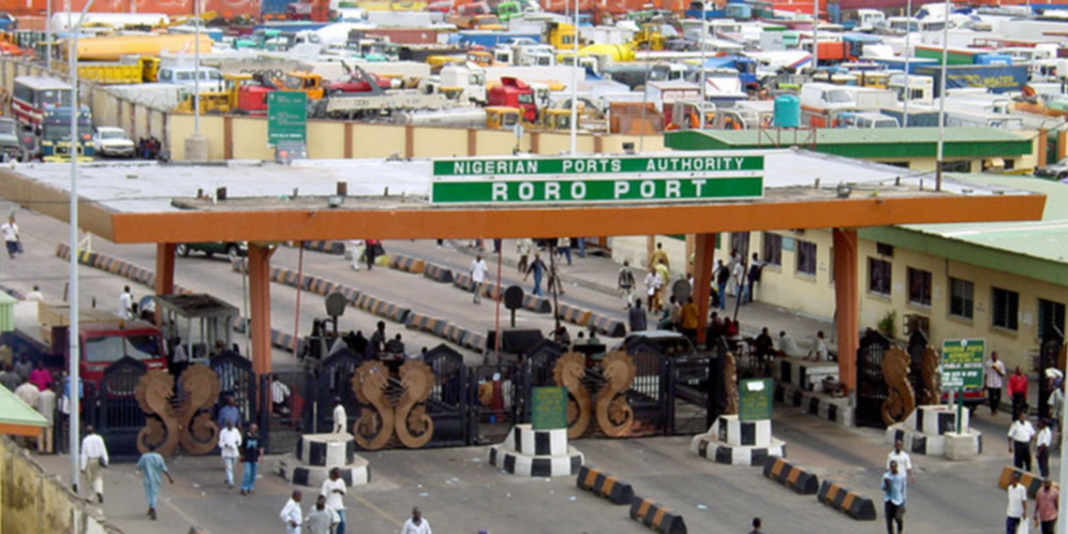
Nigeria’s seaports handled 32.38 million metric tonnes of cargo in the first quarter of 2026, representing an 11.6% year-on-year increase, the Nigerian Ports Authority has disclosed.
The growth was driven by stronger vessel traffic, rising export volumes, and ongoing port reforms across key terminals.
The NPA Managing Director, Abubakar Dantsoho, attributed the performance to improved cargo efficiency, greater international shipping confidence, and the deployment of larger vessels at Lekki Deep Sea Port.
📢 Stay Updated — Join Our WhatsApp Channel
💬 Be Part of Our WhatsApp Community
Join our WhatsApp Channel for curated updates, breaking stories, and exclusive insights from our newsroom.
📲 Join 👉 NRTC WhatsApp Channel
He also cited expanding regional trade under the African Continental Free Trade Area as a contributing factor.
Ocean-going vessel Gross Registered Tonnage rose 19.5% to 46.75 million during the period. Outward cargo volumes climbed 23.7% to 14.13 million tonnes, while outward laden containers surged 67.6% to 102,803 TEUs. Vehicle traffic also increased 67% to 58,870 units.
ALSO READ
The Q1 figures build on strong 2025 full-year performance, when total cargo throughput rose 24.8% to 129.3 million metric tonnes and container traffic grew 25.7% to over 2.1 million TEUs. Lekki Deep Sea Port accounted for 40.6% of that annual total, establishing it as Nigeria’s top-performing terminal ahead of Onne and Apapa.
Dantsoho noted that a $1 billion overhaul of the Lagos Port Complex and Tin Can Island Port is underway following the approval of a Memorandum of Understanding. The Minister of Marine and Blue Economy, Adegboyega Oyetola, confirmed that procurement processes are ongoing for modernisation works at Warri, Port Harcourt, Onne, and Calabar ports.
Key digitalisation initiatives, including the Port Community System and National Single Window project, are being implemented to reduce cargo dwell time, cut logistics costs, and improve transparency across terminals.
🔍 Explore More
- NRTC English Knowledge Base – Learn, improve, and sharpen your English skills.
- Top Stories From Around the World – Stay informed with the latest global news and insights.
- Specially Curated Listicles – Discover interesting lists, guides, and deep dives selected for our readers.
- Stay Updated: Join our mailing list and never miss the latest articles and updates from NRTC.
Despite the growth, Dantsoho noted that Nigeria currently handles only about 25% of West Africa’s cargo, despite accounting for nearly 60% of the region’s GDP, underlining the scale of untapped capacity.
Sustained port investment and reform are expected to strengthen Nigeria’s position as a regional logistics hub as global shipping continues to shift toward deeper-draft infrastructure.