



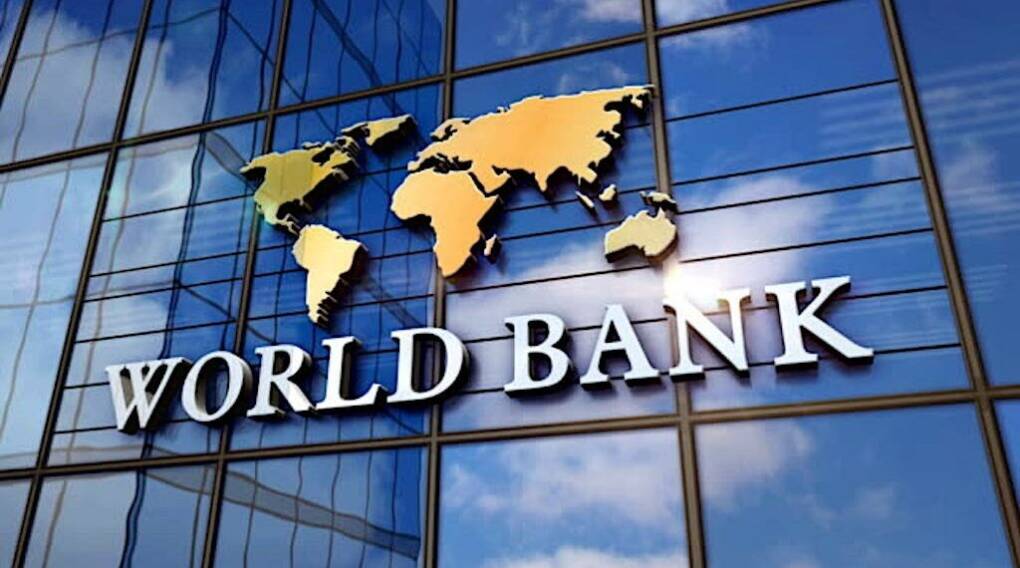
The Federal Government has withdrawn from a major World Bank-backed electricity recovery programme, leading to the cancellation of $717.7 million in undisbursed financing meant for Nigeria’s struggling power sector.
Documents obtained from the World Bank showed that the cancellation affected the remaining balance of the $1.52 billion Power Sector Recovery Performance-Based Operation after both Nigeria and the bank agreed to discontinue the arrangement due to ongoing sector difficulties and failure to meet critical reform targets.
According to a restructuring document released by the World Bank, the entire outstanding balance under the programme has now been scrapped. “The restructuring will result in the cancellation of the entire undisbursed balance in the amount of $717.7m equivalent, and no further disbursements will be made under the Program following approval of this restructuring,” the bank stated.
The World Bank also revealed that the project, originally scheduled to end on June 30, 2027, will now close earlier on May 31, 2026.
The intervention was introduced to support reforms aimed at improving electricity supply, strengthening the financial health of the sector, and increasing accountability among agencies operating within Nigeria’s power value chain.
The initial phase of the programme received approval on June 23, 2020, with funding of about $752.5 million. Following what the World Bank described as encouraging progress, an additional financing package worth about $763.5 million was approved in June 2023 to deepen reforms and sustain earlier gains.
Combined, both facilities amounted to roughly $1.52 billion.
ALSO READ: Oil prices fall as US-Iran talks ease supply fears
While the original programme reportedly achieved most of its targets and fully utilised its allocated funds, the additional financing package failed to record similar progress. The World Bank noted that the sector continued to struggle with poor distribution performance, weak transmission infrastructure, underused generation capacity, and deep financial imbalances.
According to the report, huge technical and commercial losses, alongside weak revenue collection and poor cost recovery, worsened liquidity pressures across the electricity supply chain.
“These constraints have created recurrent financing gaps, most notably in the form of tariff shortfalls, which generate liquidity pressures across the value chain and weaken the operational and financial performance of sector institutions,” the report said.
The Federal Government had designed the Power Sector Recovery Programme to restore the industry’s financial sustainability, reduce pressure on public finances, improve operations, and strengthen oversight across the sector.
The World Bank acknowledged that some improvements were achieved during the implementation of the original programme. Tariff shortfalls reportedly declined by 71 per cent between 2019 and 2022, dropping from N581 billion to N166 billion, while cost recovery improved from 56 per cent to 94 per cent. Electricity supplied to the distribution grid also rose by 13 per cent between 2018 and 2021.
“Implementation of the parent operation was satisfactory, brought substantial results, and fully disbursed the PforR component as all DLRs were achieved,” the report stated.
However, the bank said later reforms under the additional financing arrangement suffered major setbacks, largely due to economic developments that altered the operating environment.
The report explained that the liberalisation of Nigeria’s foreign exchange market in June 2023 led to a sharp depreciation of the naira, significantly increasing the cost of natural gas used in electricity generation.
“The liberalisation of the foreign exchange market in June 2023 led to a significant depreciation of the local currency Naira, which resulted in a big increase in prices of natural gas used to produce above 70 per cent of electricity injected in the national power system,” the report stated.
ALSO READ: CBN scraps FX price verification portal: streamlining or uncertainty?
Despite rising production costs, electricity tariffs for most consumers remained largely unchanged, except for Band A customers whose tariffs were adjusted in April 2024.
The World Bank said the widening gap between production costs and actual revenue pushed annual tariff shortfalls from N140 billion in 2022 to about N1.9 trillion in both 2024 and 2025.
“Due to the mismatch between the electricity generation costs and the sector tariff revenues, the tariff shortfalls increased sharply in the last 3 years, moving from a low of N140bn in 2022 to a high of N1.9tn per year in 2024 and 2025, putting serious pressure on the limited Federal Government of Nigeria’s fiscal space,” the World Bank said.
The bank added that Nigeria failed to meet key performance indicators tied to the additional financing because authorities could not establish a sustainable financing framework capable of reducing tariff deficits.
“Recent financing plans have not fully identified sufficient sources of funding to cover tariff shortfalls, nor established a credible trajectory for their reduction,” the report stated.
📢 Stay Updated — Join Our WhatsApp Channel
💬 Be Part of Our WhatsApp Community
Join our WhatsApp Channel for curated updates, breaking stories, and exclusive insights from our newsroom.
📲 Join 👉 NRTC WhatsApp Channel
Implementation delays also contributed to the poor performance of the programme. According to the World Bank, challenges involving the alignment of performance improvement plans, especially those connected to the Transmission Company of Nigeria, as well as verification bottlenecks, slowed progress and affected fund releases.
“These constraints have limited the ability to trigger disbursements even where elements of progress have been achieved,” the report stated.
Financial records attached to the restructuring document showed that out of the $449 million committed under the International Bank for Reconstruction and Development component, only $41.24 million was disbursed, leaving more than $407 million unused.
The bank further disclosed that while almost 95 per cent of the parent programme was disbursed successfully, only about nine per cent of the additional financing package was released.
“Of the AF combination of a loan and a credit totalling $763.5m equivalent, only 9 per cent, corresponding to prior results of the PforR, have been disbursed,” the report stated.
The World Bank concluded that the programme’s original structure no longer aligned with the realities facing Nigeria’s electricity sector.
“Taken together, these developments point to a misalignment between the design of the operation and the evolving implementation context,” the report stated.
Meanwhile, the Accountant-General of the Federation, Dr Shamseldeen Ogunjimi, recently warned that Nigeria could decline future World Bank loans if delays in approval and disbursement continue.
Speaking during a meeting with a World Bank delegation in Abuja, Ogunjimi stressed that loan approvals should not take excessively long since the facilities come with repayment obligations.
“If approvals take more than six months, the Nigerian Government may no longer honour such arrangements,” he said.
🔍 Explore More
- NRTC English Knowledge Base – Learn, improve, and sharpen your English skills.
- Top Stories From Around the World – Stay informed with the latest global news and insights.
- Specially Curated Listicles – Discover interesting lists, guides, and deep dives selected for our readers.
- Stay Updated: Join our mailing list and never miss the latest articles and updates from NRTC.
He urged the World Bank to “expedite the approval and disbursement of project funds to Nigeria” to ensure projects align with government timelines and fiscal plans.
However, the World Bank’s Senior External Affairs Officer, Mansir Nasir, clarified that the institution does not release project financing in a lump sum but disburses funds in stages based on project structure and financing conditions.
Despite the latest cancellation, Nigeria remains one of the World Bank’s biggest borrowers through the International Development Association. Recent financial records showed that Nigeria ranked as the third-largest borrower from the institution as of the first quarter of 2026, behind Bangladesh and Pakistan.