




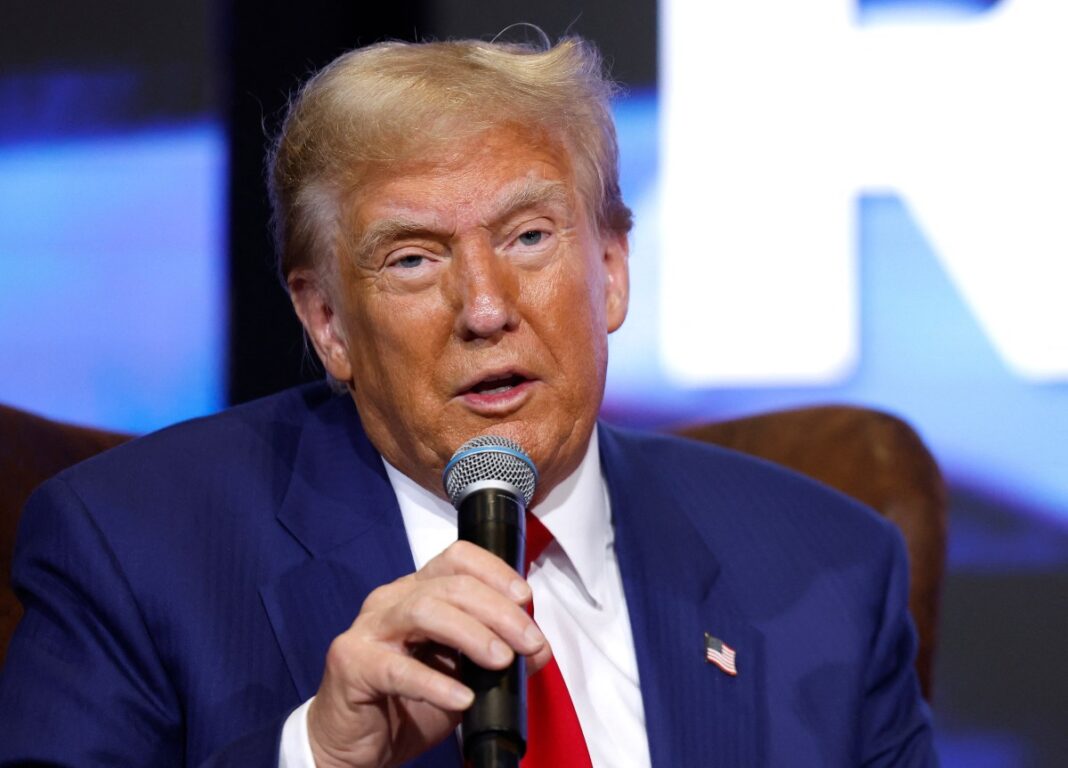
U.S. President Donald Trump has signed a new executive proclamation aimed at restructuring import tariffs on aluminum, steel, and copper.
The legislative adjustment is designed to catalyze immediate capital investments across the domestic agricultural and industrial manufacturing landscapes.
The executive directive, signed on Monday builds upon the administration’s broader use of Section 232 of the Trade Expansion Act, which grants the executive branch authority to impose import duties on commodities deemed a threat to national security.
According to an official White House fact sheet detailing the proclamation, the new order will reduce existing import tariffs on critical agricultural machinery, such as crop combines and harvesters, lowering the rate from 25 percent down to 15 percent.
📢 Stay Updated — Join Our WhatsApp Channel
💬 Be Part of Our WhatsApp Community
Join our WhatsApp Channel for curated updates, breaking stories, and exclusive insights from our newsroom.
📲 Join 👉 NRTC WhatsApp Channel
Concurrently, the administration is broadening the scope of industrial hardware subject to a normalized 15 percent tariff.
This expanded bracket will now encompass mobile heavy-duty industrial machinery, including bulldozers and forklifts.
The White House noted that this specific rate applies preferentially to machinery imported from nations holding active trade agreements with the United States that qualify for such status.
READ MORE: Trump to attend Club World Cup final as FIFA opens office in Trump Tower
The temporary tariff adjustments are scheduled to take effect on June 8, 2026, and will remain active through December 31, 2027.
“Many products in these categories are treated as derivative articles of aluminum or steel because they tend to be predominantly composed of aluminum or steel,” Trump noted in the proclamation.
He explained that the temporary timeline aims to “spur near-term investments that will rebuild the nation’s industrial base.”
In a bid to support American metal foundries, the proclamation introduces a strategic incentive for foreign manufacturing firms.
Overseas companies can now qualify for a significantly reduced 10 percent duty rate on their capital equipment, provided they can mathematically prove that the machinery consists of at least 85 percent U.S.-melted steel or aluminum by total weight.
The administration maintained that the measures are necessary to stabilize sectors heavily reliant on raw metals, ensuring domestic factories can operate on an even playing field while protecting local jobs and safeguarding public health infrastructure.
🔍 Explore More
- NRTC English Knowledge Base – Learn, improve, and sharpen your English skills.
- Top Stories From Around the World – Stay informed with the latest global news and insights.
- Specially Curated Listicles – Discover interesting lists, guides, and deep dives selected for our readers.
- Stay Updated: Join our mailing list and never miss the latest articles and updates from NRTC.
The June directive follows an enforcement executive order signed by Trump in April, which sought to reform how import tariffs on metals are legally assessed.
Administration officials stated that stricter evaluation rules became necessary after investigators discovered that several international wholesalers and exporters were artificially deflating the stated value of their cargo to evade tariff liabilities.
Under those tightened April guidelines, any imports consisting entirely or almost entirely of raw copper, aluminum, or steel are hit with a flat 50 percent tariff based on their full valuation, while most derivative goods face a 25 percent duty.
READ MORE: Trump announces $5m ‘gold card’ residency permits for wealthy immigrants
The White House reiterated that keeping a 15 percent tariff on metal-intensive industrial gear and electrical grid infrastructure through 2027 is crucial to accelerating the massive structural factory expansion currently underway across the United States.