








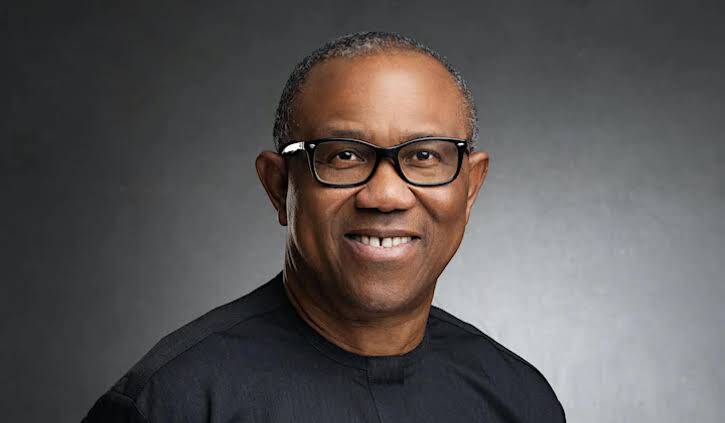
One of the strongest political brands in Nigeria today is that of Peter Obi. For many young Nigerians, he represents competence, prudence, simplicity, and a break from the old style of politics that has dominated the country for decades. His supporters see him as disciplined, intelligent, and more measured than many of his contemporaries. Even his critics often admit that he has a calmer public image than the average Nigerian politician.
But beyond the social media energy, beyond the chants of “Obidient,” and beyond the emotional attachment many people have developed towards him, there is a question that continues to follow him quietly like a shadow: how many political parties can one man belong to before people begin to question what he truly stands for?
That question is becoming increasingly difficult to ignore, especially with the growing conversations around his recent political alignments and coalition movements ahead of another election cycle. Even when these movements are defended as strategic consultations or coalition-building efforts, they continue to reinforce the perception that Peter Obi is constantly politically mobile.
In Nigerian politics, defections are common. Politicians move from one party to another almost as if parties are transport buses. Ideology hardly exists. Principles are often secondary to ambition. But the problem is that Peter Obi built his popularity on the promise that he was different from the typical Nigerian politician. Once you present yourself as morally and politically different, people naturally begin to hold you to a higher standard. That is where the issue lies.
Peter Obi’s political journey has not exactly been stable. He began his major political rise under the All Progressives Grand Alliance, APGA, where he became governor of Anambra State. At the time, APGA had a strong regional emotional appeal in the Southeast, especially among the Igbo population. Obi benefited greatly from that platform and became one of the party’s most prominent faces.
But after leaving office, he eventually moved to the Peoples Democratic Party, PDP. Under the PDP, he became the running mate to Atiku Abubakar during the 2019 presidential election. At that time, many people defended his movement by arguing that politics is about strategy and survival.
Then came another dramatic shift. In 2022, Peter Obi dumped the PDP and joined the Labour Party shortly before the presidential election. His supporters celebrated the move because the Labour Party suddenly became the vehicle for a massive youth movement. The excitement of that election almost erased conversations about his repeated party changes.
But politics is not only about moments. It is also about memory. That is why his recent association with coalition conversations involving opposition figures has again reopened debates about whether Peter Obi is gradually becoming too comfortable with political movement. Even though coalition politics is normal in democracies, repeated repositioning can still create doubts about long-term ideological stability.
The danger for Peter Obi is that the more he changes political parties or constantly associates himself with new political arrangements, the easier it becomes for opponents to paint him as inconsistent. Nigerian voters may be emotional, but they are not entirely forgetful. At some point, especially if his presidential ambitions continue into future elections, people will begin asking deeper questions about what exactly binds him politically beyond personal ambition.
One of the strongest currencies in politics is identity. Voters want to know what a politician truly represents. They want to know where the person stands even when conditions become uncomfortable. This is why politicians who stay loyal to one political ideology or movement for years often build stronger institutional trust. When someone changes platforms too frequently, it creates uncertainty.
Today, Peter Obi is seen as a reform-minded politician. Tomorrow, critics may successfully frame him as another ambitious Nigerian politician who simply goes wherever his chances are brightest. Whether fair or unfair, perception matters heavily in politics.
📢 Stay Updated — Join Our WhatsApp Channel
💬 Be Part of Our WhatsApp Community
Join our WhatsApp Channel for curated updates, breaking stories, and exclusive insights from our newsroom.
📲 Join 👉 NRTC WhatsApp Channel
Another issue is that constant political movement weakens party-building credibility. One reason many Nigerian political parties remain weak is because influential politicians rarely stay long enough to build them. Parties become temporary election vehicles instead of ideological institutions. If Peter Obi truly wants to present himself as a transformational politician, there is a strong argument that he should stop moving from platform to platform and commit himself fully to building one political structure over time.
This is one area where many of his supporters unintentionally ignore reality. They often argue that parties do not matter in Nigeria. But parties do matter, especially when a politician is asking people to trust his long-term vision for governance. If parties truly did not matter, politicians would not continue defecting whenever elections approach. A leader who constantly changes political homes risks looking politically homeless.
There is also the problem of trust among political allies. Politics runs heavily on relationships, loyalty, and negotiation. Frequent defections can create suspicion among future allies who may begin wondering whether such a politician will remain committed during difficult moments.
This becomes even more dangerous in a country like Nigeria, where coalition-building is extremely important for presidential success. Winning a presidential election requires stable alliances across regions, interests, and party structures. If key political figures begin to see Obi as someone who could easily abandon political arrangements when circumstances change, it could weaken elite confidence in him over time.
ALSO READ
Another uncomfortable truth is that Peter Obi’s supporters may not always remain as emotionally invested as they are today. Political popularity rises and falls. The energy that surrounded the 2023 election was extraordinary, especially among urban youths frustrated with Nigeria’s economic hardship and political establishment. But movements built heavily on emotions sometimes struggle to maintain the same momentum over many election cycles.
If that emotional momentum reduces in future elections, voters may begin to evaluate Obi more critically, and one of the first issues likely to return to public debate is his pattern of political migration. His opponents are already aware of this weakness.
Many of them deliberately avoid attacking his reputation for prudence because that image remains relatively strong among supporters. Instead, they increasingly focus on portraying him as politically unstable or opportunistic. If this narrative gains wider acceptance, it could damage the moral advantage that has helped distinguish him from many Nigerian politicians.
What makes this issue more complicated is that Peter Obi himself often speaks about character, leadership, and doing politics differently. Those are powerful messages, but they also increase expectations. Once a politician consistently presents himself as morally distinct, every action becomes more scrutinized. People begin expecting ideological consistency, not just electoral calculations.
To be fair, there are arguments in his defence.
Some people believe Obi’s defections were strategic responses to hostile political environments. Others argue that Nigeria’s political parties lack ideological differences anyway, making party loyalty less meaningful. There are also those who believe the Labour Party movement gave millions of frustrated Nigerians renewed political hope, which might justify his decision to leave the PDP.
Those arguments are not entirely baseless. The Nigerian political environment is messy, transactional, and often hostile to reform-minded politicians. It is possible that Obi genuinely felt constrained within previous political structures. It is also true that many celebrated politicians across the world have changed parties before.
But frequency still matters. There is a difference between a politician making one major ideological shift and a politician repeatedly changing political platforms within relatively short periods. Eventually, people start asking whether the politician is following convictions or simply following opportunities. That distinction is important.
🔍 Explore More
- NRTC English Knowledge Base – Learn, improve, and sharpen your English skills.
- Top Stories From Around the World – Stay informed with the latest global news and insights.
- Specially Curated Listicles – Discover interesting lists, guides, and deep dives selected for our readers.
- Stay Updated: Join our mailing list and never miss the latest articles and updates from NRTC.
I think Peter Obi still has enormous political relevance. He remains one of the most influential opposition figures in Nigeria today. His appeal among educated youths, first-time voters, and frustrated Nigerians is still significant. But if he hopes to sustain that relevance long-term, he may need to understand that charisma and popularity alone are not enough.
Political consistency matters.
Institutional loyalty matters.
Stability matters.
At some point, Peter Obi may need to settle politically and build something durable instead of constantly appearing in transit. Because the longer a politician looks like a traveller between parties, the harder it becomes to convince people that he truly belongs anywhere.
And in politics, once voters begin to see a leader as permanently mobile, they may eventually stop following him altogether.