
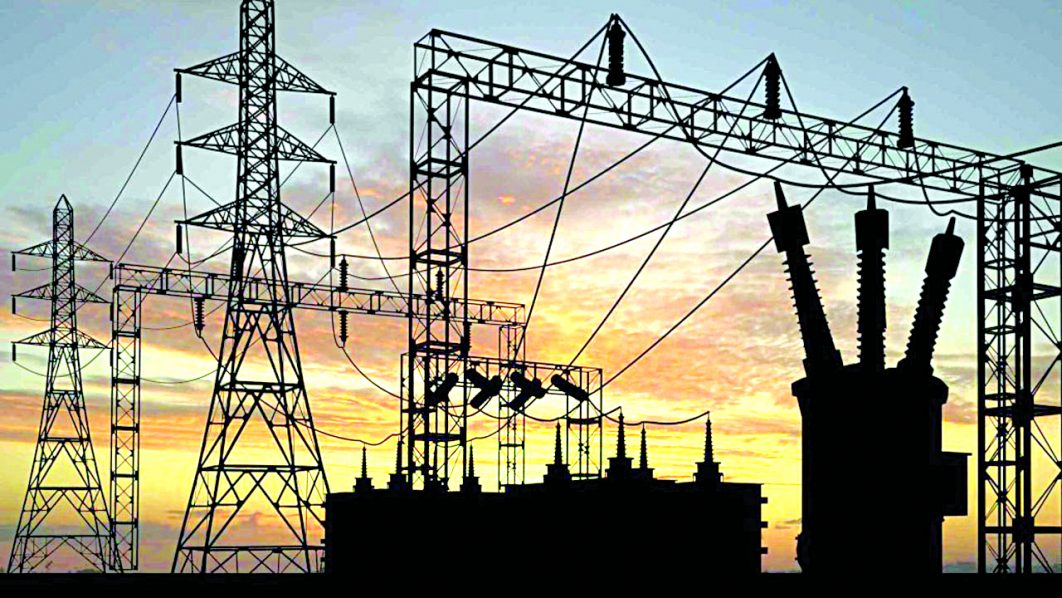
The Transmission Company of Nigeria (TCN) has said the national grid currently has the capacity to transmit up to 8,700 megawatts of electricity, significantly above the highest volume of power ever generated and delivered in the country.
Managing Director and Chief Executive Officer of TCN, Engineer Sule Ahmed Abdulaziz, disclosed this during a four-day parliamentary and stakeholders’ engagement summit on power sector reforms.
📢 Stay Updated — Join Our WhatsApp Channel
💬 Be Part of Our WhatsApp Community
Join our WhatsApp Channel for curated updates, breaking stories, and exclusive insights from our newsroom.
📲 Join 👉 NRTC WhatsApp Channel
He said the transmission network has consistently evacuated all available electricity generated, indicating that the grid can accommodate higher power output if generation capacity improves.
ALSO READ: Iran faces major setback as World Cup ticket allocation revoked
According to Abdulaziz, Nigeria’s highest electricity generation and transmission record was achieved on March 4, 2025, when 5,801.84MW was delivered to the national grid.
The feat was accompanied by a record daily energy supply of 128,370.75 megawatt-hours, the highest ever recorded in the country’s power sector.
He explained that TCN expanded its bulk power wheeling capacity from about 7,000MW to 8,700MW through infrastructure upgrades supported by the Federal Government and international development partners.
The TCN boss revealed that between January 2024 and November 2025, the company commissioned 82 transformers nationwide, adding about 8,500 megavolt-amperes of transformation capacity.
Several transmission lines and substations were also completed to improve reliability, flexibility and redundancy across the network.
Abdulaziz further disclosed that TCN has secured more than $1.4 billion in funding from the World Bank, the African Development Bank and the Japan International Cooperation Agency to finance transmission expansion and modernisation projects.
As part of efforts to improve grid operations, he said the company is deploying a nationwide Supervisory Control and Data Acquisition (SCADA) system to provide real-time monitoring, faster fault detection and improved dispatch efficiency.
ALSO READ: ‘Shameless lots’ – Peggy Ovire blasts estranged husband, Frederick Leonard, alleged lover
Despite the progress, Abdulaziz identified vandalism and sabotage of transmission infrastructure as major challenges affecting electricity supply and increasing operational costs.
🔍 Explore More
- NRTC English Knowledge Base – Learn, improve, and sharpen your English skills.
- Top Stories From Around the World – Stay informed with the latest global news and insights.
- Specially Curated Listicles – Discover interesting lists, guides, and deep dives selected for our readers.
- Stay Updated: Join our mailing list and never miss the latest articles and updates from NRTC.
He also expressed concern over encroachment on transmission corridors, describing it as a threat to maintenance activities and future network expansion.
He stressed that while transmission capacity has improved, greater investment is still required in power generation, gas supply and distribution networks.
He added that a financially sustainable electricity market supported by efficient revenue collection, stronger payment discipline and a stable regulatory framework remains critical to attracting long-term investment into the sector.