




The Federal Government (FG) has moved to strengthen its fight against malnutrition with the approval of the National Policy on Food and Nutrition (NPFN) 2026–2035, a sweeping 10-year framework designed to improve nutrition outcomes across the country.
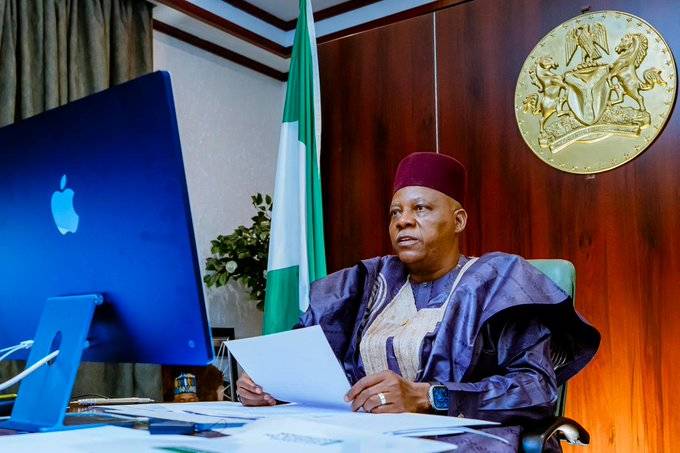
The policy was adopted yesterday during the 15th virtual meeting of the National Council on Nutrition (NCN), chaired by Vice President Kashim Shettima.
It has now been forwarded to the Federal Executive Council (FEC) for final approval.
Addressing members of the Council, Shettima stressed that the success of the policy would not be judged by official meetings or reports.
He said by real improvements in the lives of Nigerians, particularly mothers and children across all 774 Local Government Areas.
“We will be judged not by our deliberations but by our deliveries,” he said.
📢 Stay Updated — Join Our WhatsApp Channel
💬 Be Part of Our WhatsApp Community
Join our WhatsApp Channel for curated updates, breaking stories, and exclusive insights from our newsroom.
📲 Join 👉 NRTC WhatsApp Channel
“Behind every statistic is a Nigerian child whose future depends on what we do—or fail to do—in the months ahead.”
He described the new framework as one of the most significant nutrition reforms in Nigeria’s history, noting that it requires coordinated action across all levels of government and key sectors.
To prevent delays in implementation, the Council issued firm directives to federal and state actors.
READ ALSO
It noted that only nine of Nigeria’s 36 states currently have functional nutrition councils, and tasked the Nigeria Governors’ Forum with ensuring that the remaining 27 states, along with the FCT, establish theirs within three months.
The Council also directed all relevant Ministries, Departments and Agencies (MDAs) to align their budgets and programmes with the new policy within 12 months.
Multisectoral nutrition
In addition, states and the FCT were instructed to develop and roll out their tailored multisectoral nutrition action plans within a timeframe of six to nine months.
At the heart of the reform is the Nutrition 774 Initiative, which focuses on delivering measurable nutrition improvements at the household level across every local government area
.To strengthen implementation, the Council is also fast-tracking a National Nutrition Bill.
Once passed, it will provide legal backing for nutrition funding and clearly define responsibilities across federal, state and local governments.
🔍 Explore More
- NRTC English Knowledge Base – Learn, improve, and sharpen your English skills.
- Top Stories From Around the World – Stay informed with the latest global news and insights.
- Specially Curated Listicles – Discover interesting lists, guides, and deep dives selected for our readers.
- Stay Updated: Join our mailing list and never miss the latest articles and updates from NRTC.
The draft legislation is expected to be submitted to the National Assembly within the next eight weeks.
To address long-standing funding gaps, the Council expanded its financing sub-committee to include the Ministry of Humanitarian Affairs, the Commissioners of Finance Forum, and the Association of Local Governments of Nigeria (ALGON).
Shettima also directed the creation of a co-branded private sector nutrition challenge window, which is expected to launch within 60 days.
The initiative will be developed in partnership with the Dangote Foundation, alongside the Ministries of Trade, Investment and Innovation, to attract private sector funding for nutrition programmes.
Minister of Budget and Economic Planning, Atiku Bagudu, alongside other stakeholders, described the policy as a timely intervention to protect Nigeria’s human capital.
They noted that its integrated approach, combining legislation, grassroots implementation, and private sector participation—represents one of the most comprehensive efforts yet to tackle malnutrition and improve long-term national wellbeing.